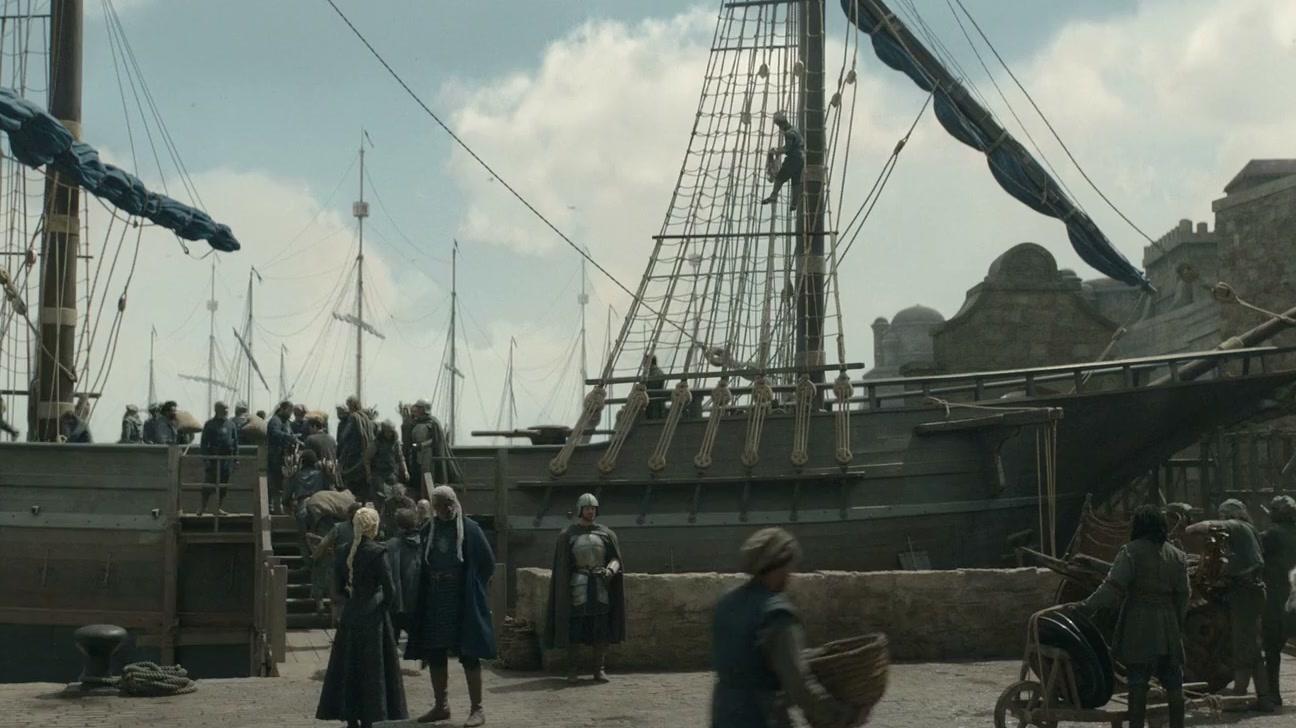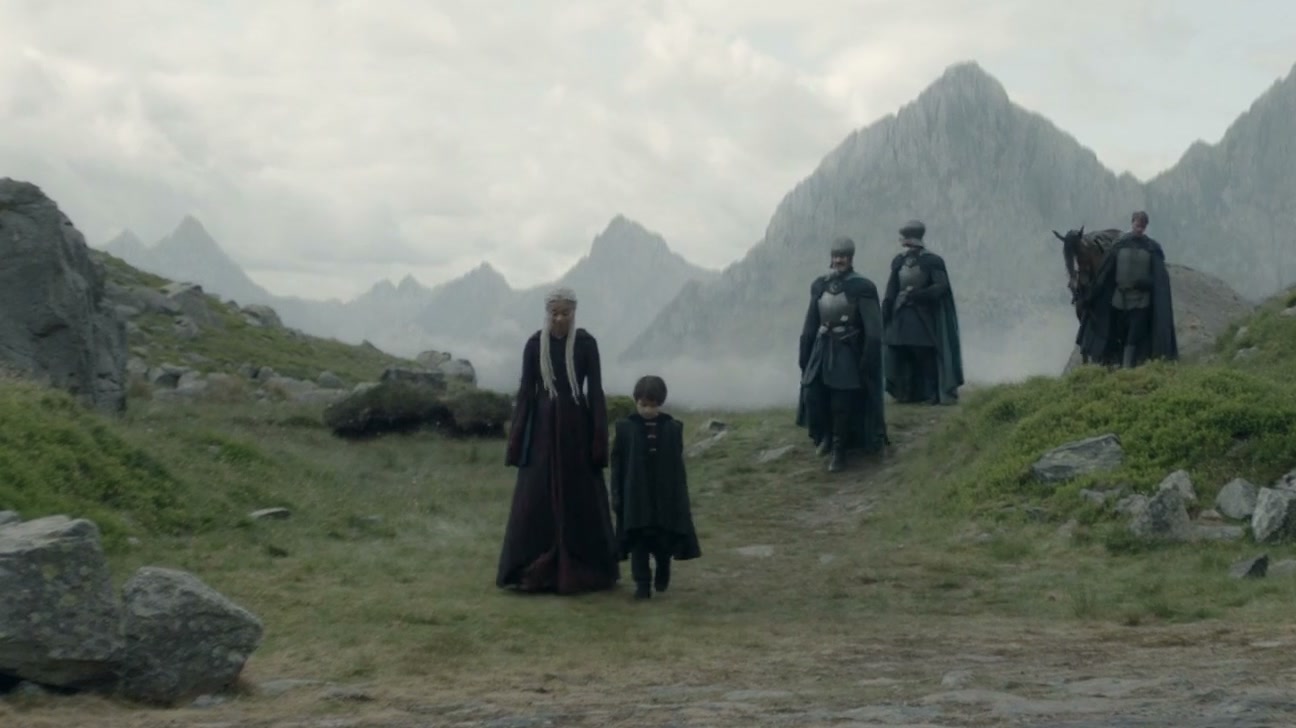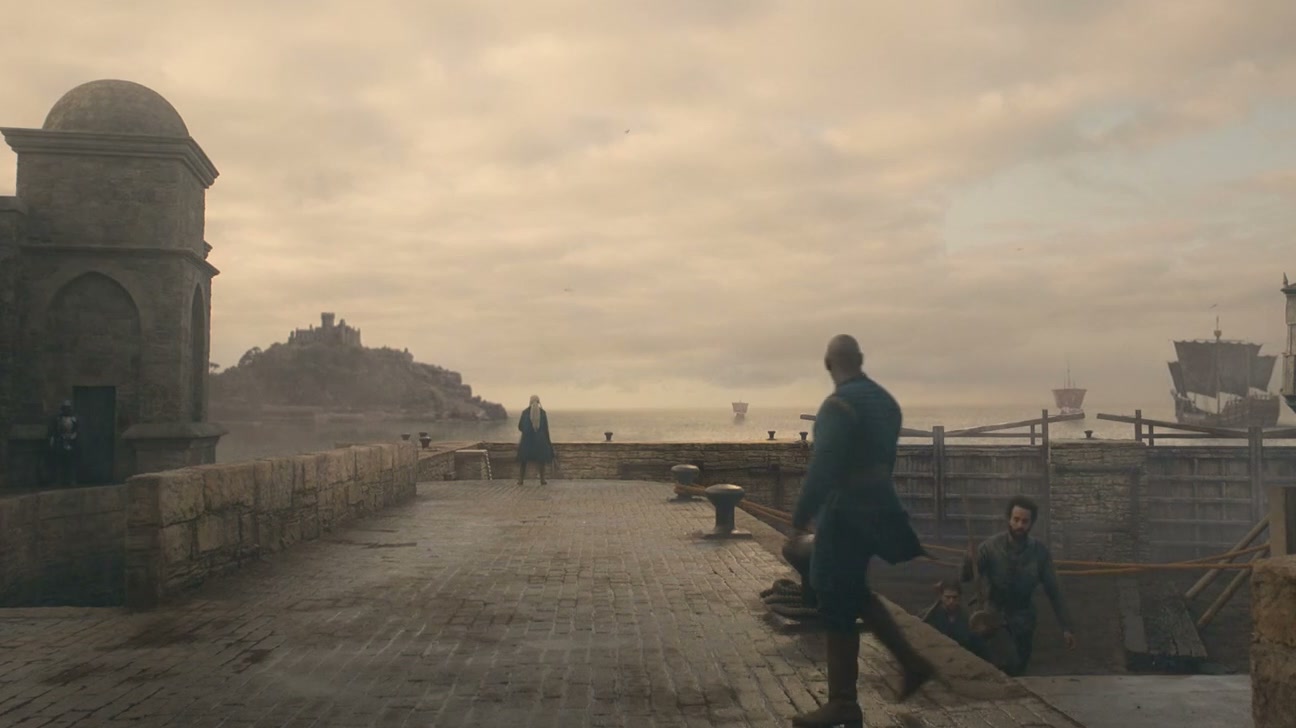
Short answer: Visual development is the point when a world moves from written description to a set of visual rules that a crew can build against: its palette, its light, its materials, its architecture and its silhouettes. A visual development artist provides exploration sets, colour and lighting keys, and a short written language for the world, not one hero picture. It occurs after the script and before the concept art is locked, the last window where changing a fundamental decision still costs a conversation rather than a department.
Until they have skipped it, most productions do not realize they are paying for visual development. Many budgets have no line for it, many live-action art departments have no card for it, and there is no clear point when anyone asks for it. What it does have is a bill, and the production receives that bill late, in the month when several artists who were never in the same room turn in versions of the same place that do not match each other.
What a visual development artist actually hands over
A vocabulary, not a picture; the pictures are the evidence for it.
Exploration sets. These images are made for comparison, not admiration: one location at three hours of the day, one building at three stages of ruin, one sky doing three different things. A single picture only allows a like or dislike, and a more senior person can reverse that preference the moment they see the frame. A set shows the exchange clearly, so the decision that follows sticks.
Colour keys and a colour script. A colour key is a small painting that sets down how a moment appears in colour and value. When those keys are placed in story order across a film or an episode, they form a colour script, and many productions use that artefact to check that the colour is carrying the story rather than fighting it. This method has long been standard in animation and also appears on live-action shows with heavy environment work.
Lighting keys. The world is rendered at the hours the story actually occurs, not at the hour that flatters a portfolio. Sun angle, how quickly distance makes the air hazy, the condition of the sky, the source of practical light.
Palette and material logic. Which colours belong in this world, which ones are kept back for one later moment, and what becomes of a colour that has no place here. What things are made from, how those materials behave under this light, and why surfaces throughout the world look as though they belong to one another.
Architecture and silhouette rules. From the way a place is built, you can see how it appears at a distance and how it looks when it fails.
State the colour space the work was made in. A palette built on one artist's display and moved to another is no longer the same palette. ACEScentral describes ACES as "the global standard for interchanging digital image files, managing color workflows and creating masters for delivery and archiving" (acescentral.com), and productions working in ACES have answered it for every vendor at once. The exploration should move back inside the show's answer. Exploration done outside that answer needs two approvals, and the second approval is the expensive one.
The written part. A brief set of limits, stated as plain sentences, that an artist can follow without needing to ask about every shot. Production teams forget to ask for this deliverable, and it is the one still in use in month five.
Layered working files, in cases where the contract requires them. During development work they are more important than usual, because a team keeps extracting elements from them for months after the exploration is over.
Where it sits in the schedule
The stage is defined by the cost of changing your mind.
When the story is already known and the setting is still undefined, that is the moment for visual development. The script describes the place as a drowned city. No one has chosen the manner of the drowning, the century, the weather, or the time. At that stage, the cost of changing the answer is a meeting.
Concept art that is approved cannot be altered without costing the concept art. A build that has started cannot be altered without costing the build. A plate that has been shot cannot be altered without costing the shot, and no amount of painting recovers a decision that should have been made before the camera was pointed. If your plates are already in the edit, you are beyond this stage and are buying digital matte painting instead, a different job with different inputs.
Visual development is not concept art
The two get ordered interchangeably and they are not interchangeable.
A concept provides the answer for one place. It settles the debate over how a specific location should look, which allows budgeting, location scouting, construction, or bidding to proceed. It is a record of the decision, and once that decision is made, its purpose is finished. The distinction, and how it holds up against the finished frame, is examined in matte painting or concept art.
Visual development defines the rules that every location follows, so the next twenty locations can be determined without returning to the start or contradicting one another. Purchase it before or together with concept art; doing development first makes the concepts better and faster, since the artist no longer re-decides the world for each image.
As a quick check: a picture answer means you want a concept. An answer you would have to tell again to every artist who joins means you want visual development.
Visual development is not art direction
Art direction holds authority for the duration of the show. It maintains the visual look, approves the work, and resolves disagreements as they emerge. The Art direction role is ongoing.
Visual development is a contained task that concludes when a decision is made. It locates the answer. For months afterward, art direction enforces that answer among people who were not present when it was discovered. On a small show, the same person often performs both tasks, but you should still know which one you are paying for, because one has an end date and the other does not.
Each side has its own failure. When you buy art direction before the world has been worked out, you bring in an approver who has nothing to approve against, and decisions get made one note at a time on work by other people. When you buy visual development and hire no one to maintain it, the rules seldom outlive the artist who wrote them.
Where the job title lives, and where it does not
For entertainment, visual development is one job that has two distinct employment histories, and only one of those histories ever placed a name on the crew list.
Animation work carries a contract title. The Animation Guild's 2024 to 2027 wage schedule includes a side letter that covers the classification "Visual Development" at Warner Bros. Animation (animationguild.org). A classification is a defined slot, and a production office can schedule and budget that slot without ever having performed the work.
In live action, no such card usually exists, and the work is spread across crafts that go by other names. The nearest named craft is the Art Directors Guild's Illustrators and Matte Artists; the guild describes its members as "visual artists and storytellers, who, in consultation primarily with the director and Production Designer, illustrate and express the look, atmosphere and emotion that move a story" (adg.org). That is the job. It sits under a different noun, inside a department that is already busy.
When you are staffing, pay attention to this gap. A missing title on the crew list does not make the work disappear. Informally, whoever has time does it, or the person least able to afford the task receives it in month five.
What it costs a production to skip it
Skipping visual development moves the money rather than saving it.
Places that do not agree. Every concept is assembled separately and seems convincing on its own, but the world they collectively form has three architectural logics and no stable weather. Only when the shots appear side by side in a cut does anyone notice.
Design decisions are made again inside a shot budget. That is how it works. Environment packages are usually bid shot by shot, and each shot bid assumes the design is settled: the artist is paid to carry out a decision, not to make one. When the rules were never defined, each shot silently includes design work that was never priced. It does not show up as a design overrun, because there is no design line to exceed. It shows up as versions.
An artist who attended none of the meetings paints a location nobody explored, receives a note, repaints it, and the notes that come back are about the world rather than the shot. Notes about the shot converge because the plate is fixed and there is something to get right. Notes about the world do not converge because nothing has been agreed for them to converge on. That loop is a common reason environment packages run long, and it is a rules problem disguised as a talent problem.
A world too costly for anyone to build. An appearance that is never checked against the schedule wins approval for its beauty, and the crew that receives it takes the blame for a design decision they never made. Buildability belongs at this point, not later.
Re-approving the look mid-run. After a vendor has begun producing shots, altering the palette or the light requires reopening the scope conversation with people who have already booked their crews.
That does not appear as an overspend in visual development. It appears as post running longer than expected, which makes the stage easy to trim and hard to justify.
What should a production ask for if there is only time for one thing?
Ask for the rules, not the pictures.
A short written list of constraints, paired with comparison sets for the one or two locations that appear most often, keeps a show more cohesive than a folder of attractive individual images. The images make the case for the rules. The rules are what the crew actually works from.
The sheet should be written as a list of things refused, not things described. It should record what this world never includes, what it never does, what would be incorrect here, and what the show is saving for later. A description opens room for interpretation, and two artists who read the same description will paint two places that both make sense. A refusal does not, and that is why it still functions for a person who joined long after the exploration ended.
If the world will also need to be built for a moving camera, mention that now, not later, because it changes what the exploration has to prove. That work is 3D environments, and designing for it from the outset is cheaper than retrofitting into it.
If you are trying to place this work
Chumak Studio, based in Toronto, produces painted environments for film and television, and visual development is one service clients request.
Between 2017 and 2026, Anastasiia Chumak's credit list includes 31 credits. Among them, three combine concept work with painting: Welcome to Mercy, credited as "Concept artist and matte painter, PostModern Digital"; Looking Up, credited as "DMP and concept artist, PostModern Digital"; and Viddana, credited as "Lead concept artist and lead matte painter, PostModern Digital". The remaining credits appear on the credits page, and completed frames are under work.
If you have set down a world in writing and are unsure what to request first, describe it and you will get a direct answer about whether this stage is the one you need. The contact page is the quickest route.