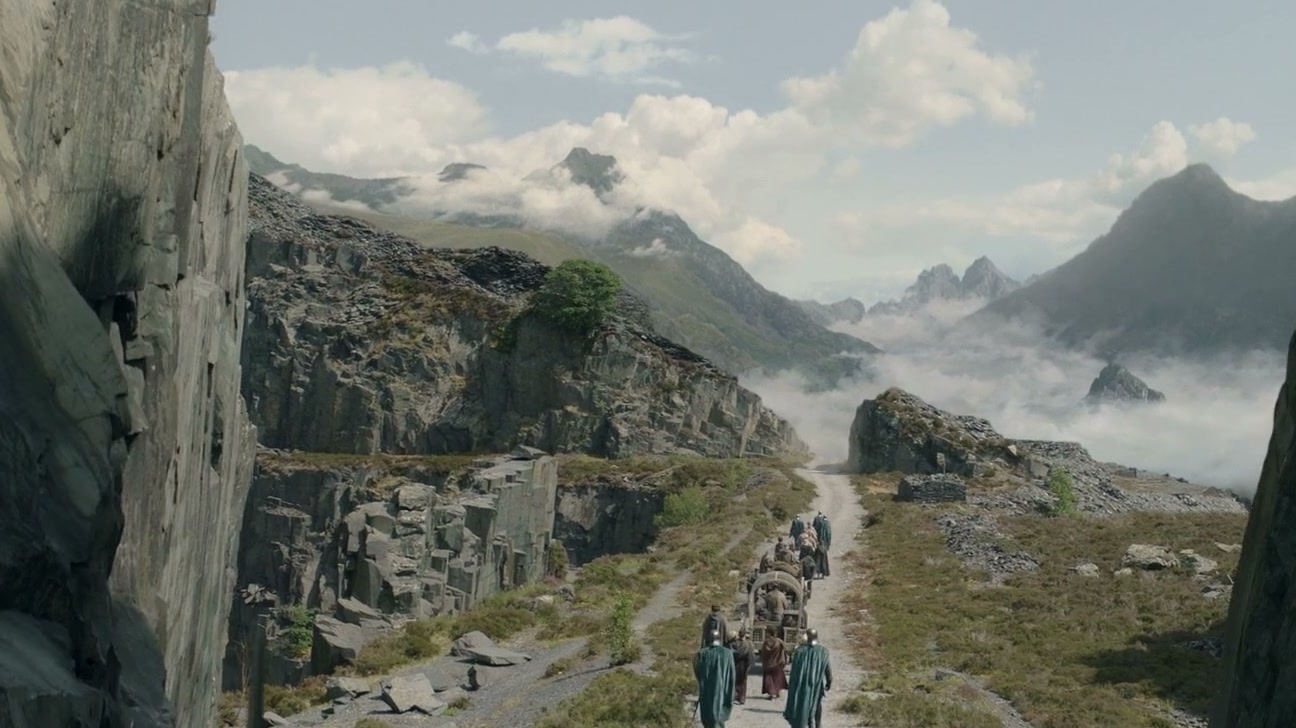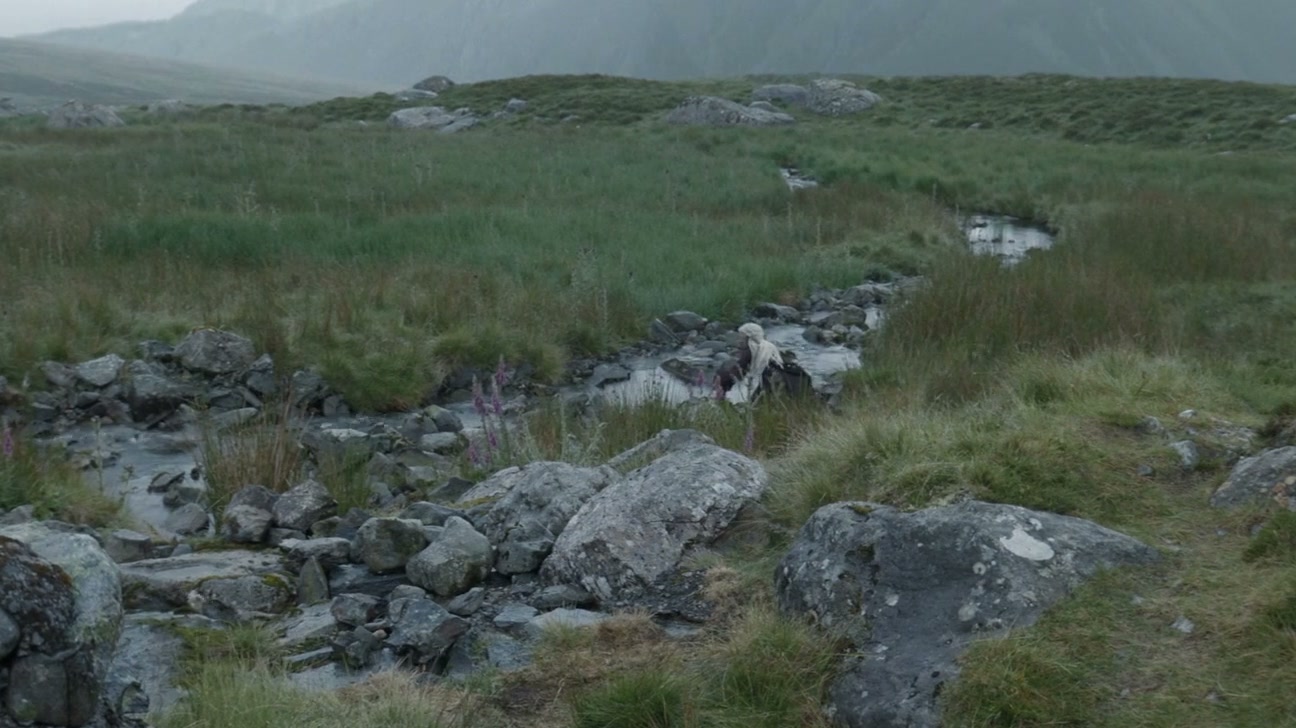
Short answer: Invisible effects are shots intended to pass as photographed footage. Erasing a modern road sign from a period street, extending a building, altering the weather, removing a crew reflection from a window. If the audience spots the work, the shot has failed, which means the quality of the work cannot be judged by how impressive it looks. The test is whether the frame stops looking like a frame.
People often find the phrase confusing when they first hear it, because they usually describe effects by what they add. When effects are invisible, people describe them by what they hide, including the fact that they happened at all.
Once you understand the category, practical details change: the review method for the work, the people who should be there, and the outcome a vendor is really being asked to optimise for.
What counts as invisible work
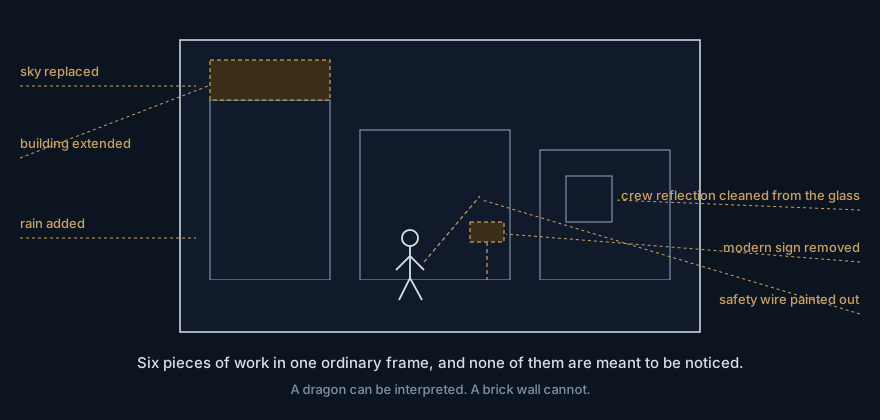
The usual categories, all common on drama, none of them spectacular.
Removal. Signage from the present day, aerials, road markings, safety equipment, wires, rigs, tracking markers, a crew member's reflection on a car. Anything that was present during the shoot but must not exist in the film's world.
Extension. The building rises upward; the street bends around the corner; the crowd moves on past the twenty extras who were actually hired.
Replacement. The sky, what one sees through a window, what a screen displays, a season that differs from the one available on the shoot date.
Repair. A continuity error from one take to the next, a light that has shifted position, a shadow that equipment casts, or damage to a location that should not be present yet.
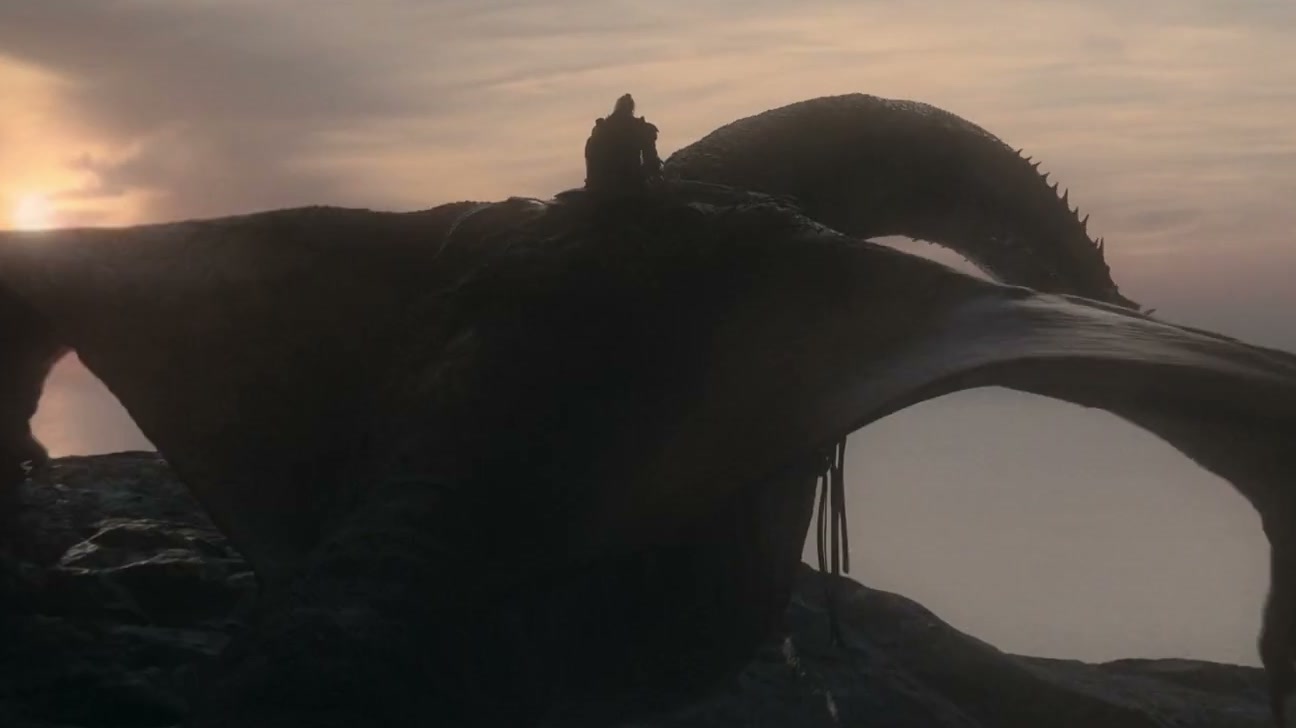
On paper, each of these seems trivial. In practice they are some of the hardest tasks in the field, because stylisation is not allowed. One can interpret a dragon. One cannot interpret a brick wall.
Why invisible work is harder than it sounds
An audience cannot draw on any reference for a dragon. They can draw on a lifetime of reference for a street.
That asymmetry is the source of the entire difficulty. Every viewer, even if they cannot explain it, understands how light falls on a wall at four in the afternoon, how a distant building sits in haze, how a reflection behaves in old glass. They will not be able to identify the mistake, but they will notice that the shot is not real, and their focus will shift from the story to the image for a moment.
The real photography occupies the same frame, so invisible work must also withstand the toughest possible comparison. A grain structure, a lens character, a depth of field falloff and a colour response were all established by a camera on a day the artist was not there, and anything made has to match them.
What this means for how you review it
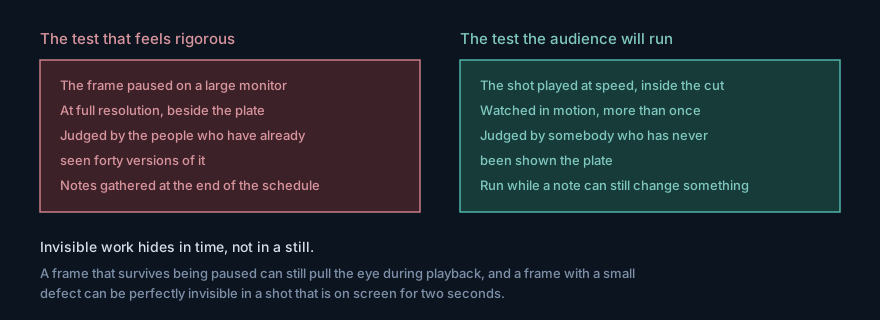
People instinctively want to view a still in a large window at full resolution and judge it against the original. That comparison is the wrong test on all counts.
Evaluate it in motion, at speed, inside the edit. Invisible work stays hidden in time, not in a still. A frame that holds up when paused can still draw the eye during playback, and a frame with a minor defect can be completely invisible at speed in a shot that stays on screen for two seconds.
Have someone who has not seen the plate review it with you. After you learn what was altered, you can no longer look past it, and everyone who sat in the review sessions can no longer judge the shot the way the audience will. A first-time viewer who watches the sequence and does not flinch is worth more than another round of notes from people who have already watched it forty times.
And be cautious about what you request at the end of a schedule. Notes that arrive late on invisible work usually produce more of it, not less, since reviewers under pressure begin fixing details that no one would have noticed. You will not improve a shot that already reads as photographic by putting more work into it.
What a good vendor optimises for
Not the beauty of the element. The match.
The working method actually differs here, and the difference appears early. Artists who create invisible effects devote a large part of their time to making their own work worse: adding grain, softening it, putting lens distortion back, removing background detail because the original photography would not retain that detail at that distance. On its own, the finished element often looks worse than the version before it. In the plate, it vanishes.
When you ask a vendor about this kind of work, the useful question is not what they would include. Ask instead what they would remove. You can tell from the answer whether they have done it before.
How do I know the work is good if I cannot see it?
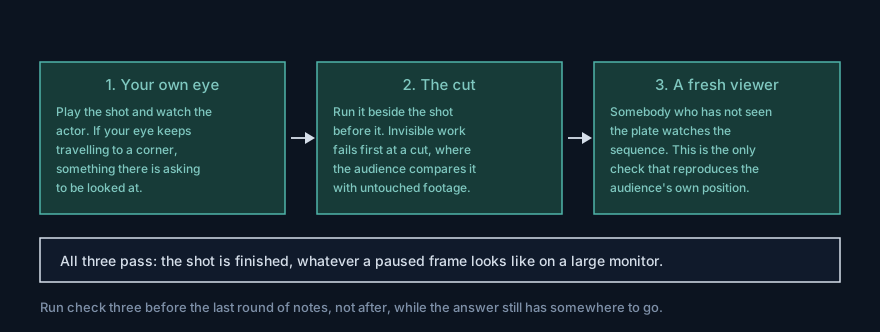
Three checks, in order.
Does your eye stay on the actor? When you play the shot, focus on the actor's performance instead of the background. If your eyes keep moving to the top left of the frame, something in that area is catching your attention.
Does it stand up beside the shot before it? Invisible work fails most often at a cut, since there the audience can compare it directly with a shot that was left untouched.
Does a person notice anything if they have not seen the plate? This is the only test that genuinely reproduces the audience's situation. Run it before the final round of notes, not after, while time remains for the answer to alter something.
Should all three pass, the shot is complete, regardless of how a paused frame looks on a large monitor.
Why this matters commercially
For drama, most environment work is invisible, and briefs consistently underdescribe it, since it neither photographs well in a pitch nor contributes to a reel.
This has a direct practical effect when you are hiring. A vendor's showreel gives more weight to the visible, dramatic side of their work, because that is what a reel is meant to do. It reveals almost nothing about whether they can take a modern street and make it 1890 without anybody noticing. If that is what your show needs, ask for it specifically, and ask to see a before and after rather than a finished frame.
Where to go from here
Chumak Studio is based in Toronto and paints environments for film and television, including the removal, extension and replacement work described here, plus digital matte painting and 3D environments. You can find the credit list at /credits/.
If your sequence contains this kind of work, send a plate and state what should no longer be present. You will receive a clear answer that says which parts are simple and which are the ones that will take the time.