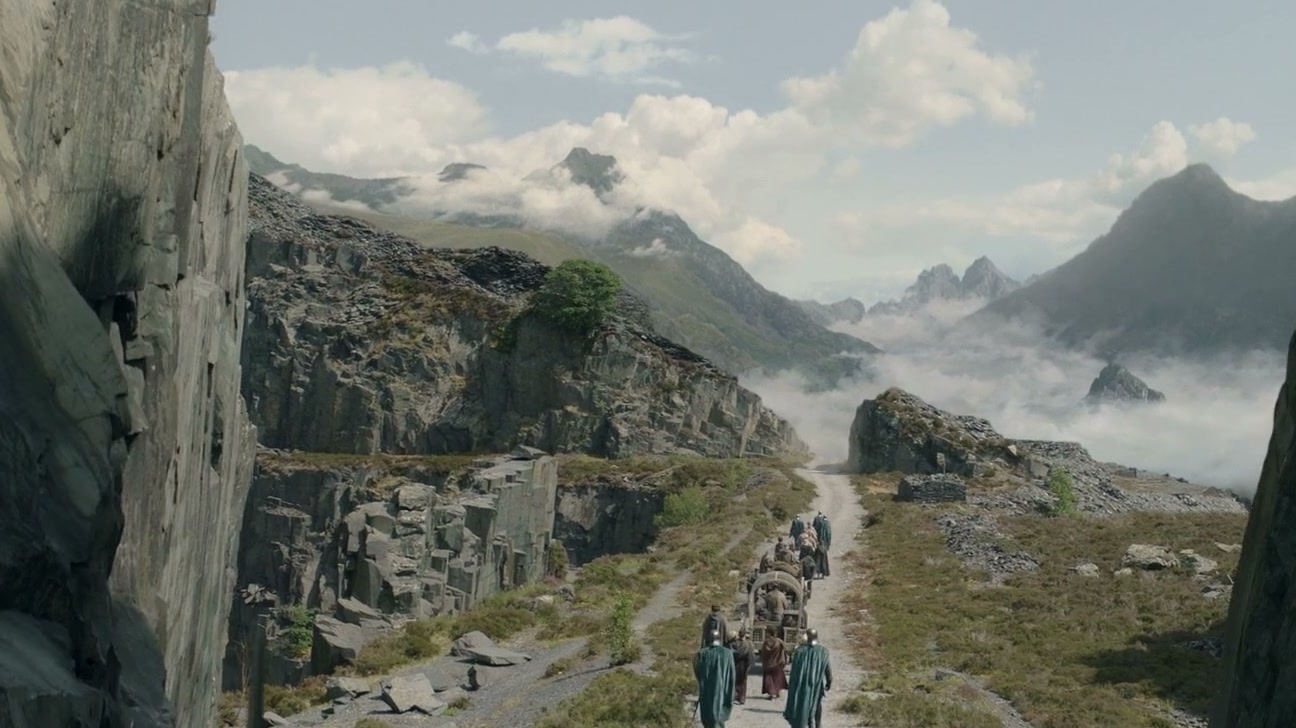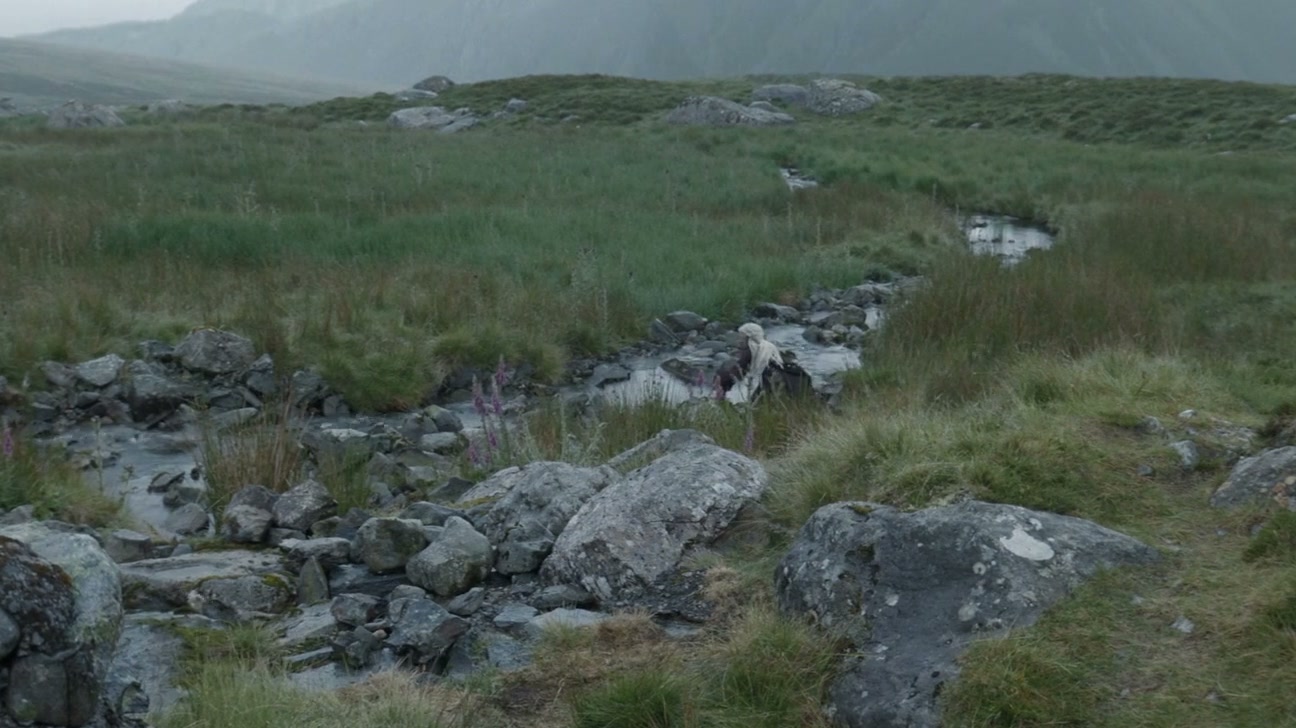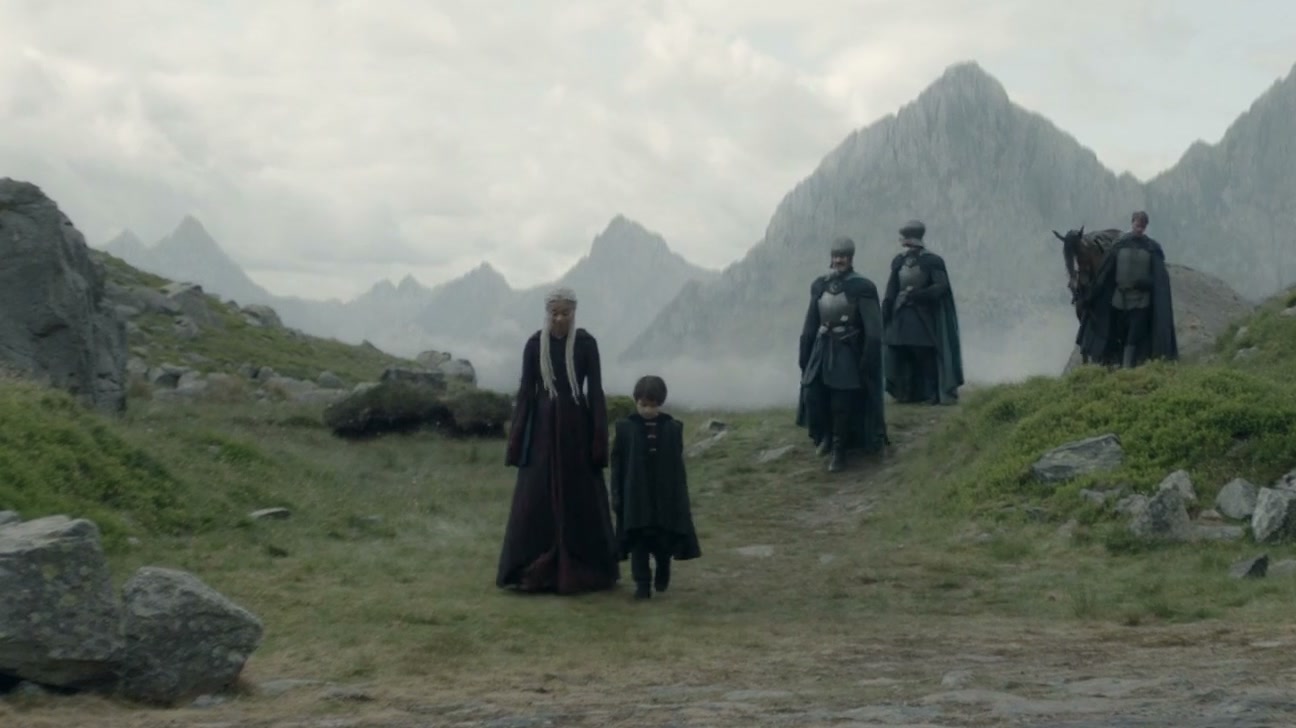
Short answer: Art direction is the practice of converting an intended look into rules that other people can apply without asking a question for each shot. On a unionised crew, the term also names a particular job title under the production designer. The Art Directors Guild defines the art director's principal function as "to support and follow through on the visual concepts for the production as specified by the Production Designer and Director". A production that commissions art direction from an outside vendor is usually buying the rules, not the job title.
Within a single production, the term means three separate things, so people keep typing the question into a search box. It is a union classification with day counts tied to it. It also refers to a general activity in which several departments each take part. In advertising, the term has yet another meaning. A producer trying to sort out whom to ask for each task has not skipped a briefing. A single word is performing three roles.
Art direction is the set of decisions that survive being written down
A choice is useful only if it can be given to someone who was not in the room and they can still produce work that matches.
Where the sun sits and what time it is. How quickly the air becomes hazy with distance. The greatest scale an object may reach while standing next to a person. The colours the show omits. What the sky does while all of this occurs. All of these have answers, the answers fit on a page, and a page can be handed to an artist who joins in week nine.
A mood board does not meet that test, since two artists reading the same board will paint two different places and each place will be defensible. Boards are meant to find the look. They are not made to keep it.
So the result of art direction is documents, not just images, and the invoice reflects that difference. When a production commissions art direction and gets a folder of pictures, the component that maintains consistency across a long show has not been supplied.
The art director and the production designer are different jobs
In the United States both job titles fall under the same union local. The Art Directors Guild, IATSE Local 800 represents members employed as "Art Directors, Graphic Artists, Illustrators, Matte Artists, Model Makers, Production Designers, Scenic Artists, set Designers, and Title Artists", a larger group than the name implies.
Within that framework, the two roles are ranked rather than equal. The Guild's description of the crafts states that production designers "create and develop the overall look, atmosphere and emotion that move the story" and, as the head of the Art Department, they provide all necessary backgrounds and make sure the sets contribute to the totality of the film. On that same page, the art director's role is to support and follow through on the concepts "as specified by the Production Designer and Director", applying "a combination of both creative and management skills", and to take complete or partial responsibility for the efforts of the art department, construction, set dressing, props, locations and special effects.
The production designer defines the world itself. The art director then creates that world under schedule and budget limits, while working with departments that do not answer to each other.
The eligibility criteria also reveal this ranking. The Guild states that joining as an assistant art director requires 400 days of experience in an art department craft in the last four years, while joining as an art director requires 175 days as either an art director or a production designer plus "an established reputation and status in production design". These are entry requirements, not a career ladder, but they indicate the direction of deference.
Most of the practices tied to the title came later than the title itself. According to the Guild's own account, Wilfred Buckland first used the term art director in 1914, so the term named a job before it named a kind of work. That is one reason the two meanings still clash. Titles also differ outside that jurisdiction, and a production filming in Canada or the United Kingdom may set out the same duties under different names and agreements. Ask about the decisions a person makes, not the title printed on their card.
Art direction and creative direction are not the same word in a smaller font
Search results for the comparison are muddled because most writing on creative direction originates in advertising and brand work, not film.
Within commercial work, the idea and the message generally belong to a creative director, and art direction inside that framework handles how the work looks and how the craft is carried out. Film does not have that role in the same form. The director holds authority over what the story means. The production designer, the cinematographer and the visual effects supervisor share the visual expression of it, in proportions that shift from show to show. But when a vendor is offered creative direction on a film, ask directly which of those existing duties is being transferred, and who approved the transfer.
Concept art feeds art direction. It does not replace it
The two are cited against one another as if a production could select either one; if the production selects wrong, it loses a month.
Concept art raises the question of what the place might be. It can be beautiful and impossible, and its value lies in cutting the options down quickly. Art direction takes the option that remains and states what is now fixed. One person can produce both, and often does, but they remain distinct deliverables with separate acceptance criteria: a concept passes when the people in the room find it exciting, and a rule set passes when a stranger can paint according to it.
When drawing a chain of command, the Guild's description of the illustrators and matte artists craft is useful. The Guild describes illustrators and matte artists as working "in consultation primarily with the director and Production Designer", and on that same page it notes that illustrators may, at the sole discretion of the producer, be assigned to any department without requiring the supervision of an Art Director. Storyboard artists are given the same sentence. The people who create the images that define a look are not automatically part of the art director's reporting line.
Where the notes stop travelling
Even when art direction is decided correctly, it can still fail to appear, because the artists who paint the environment are often not in the room where the decision was made. The union documents show this split. The Guild's page on the illustrators and matte artists craft describes matte artists twice, and the two descriptions assign them to different bosses. In one, they consult mainly with the director and production designer. In the other, on the same page, they "work with previs and with the [visual effects] supervisor during the pre-production design of the effects shots, completing the work in the post-production phase".
Both are accurate, because they describe two separate settings where the same work can be placed. A matte artist who works inside the art department receives instructions from the production designer. A matte artist at a visual effects vendor receives those instructions from the visual effects supervisor, who receives them from the production designer if someone arranged that. In current practice, a vendor delivers most environment work to the screen rather than the art department, and a production can organise it either way.
That gap is where art direction begins to come apart. The rules are set in one room and carried out by people two contracts away from that room. The failure is quiet. Two shots painted six weeks apart by two artists at two vendors each hold up on their own, yet the hills are at a different distance in each. No one made a mistake, because no one was handed a number. Making the two match afterward costs more than recording the number would have, and the bill is due at the point in the schedule with the least room in it.
For the same reason, written constraints matter more for unbuilt environments than for built ones. As The Guild describes it, a matte artist's job is to create a scene "employing photographic-like painting combined with live action to create the illusion of reality" without building an entire structure or going to a location. A set that is built is governed by physics and by a construction budget, so it stays consistent without extra cost. A landscape that exists only as a painted extension is governed by neither physics nor a construction budget.
Colour is where art direction stops being taste and becomes a pipeline question
No failure appears at the palette stage when a palette is written wider than the finishing format can hold. The failure occurs in the grade, in the week nobody has, and a repaint fixes it.
Therefore, you have to settle the finishing standard before the palette. ITU-R Recommendation BT.709, Parameter values for the HDTV standards for production and international programme exchange, specifies the parameters for high definition delivery, while BT.2020, Parameter values for ultra-high definition television systems for production and international programme exchange, defines the wider gamut used for ultra high definition. The International Telecommunication Union publishes both.
By working in ACES, many productions settle the question once for every vendor at the same time. ACEScentral describes ACES as "the global standard for interchanging digital image files, managing color workflows and creating masters for delivery and archiving" and the Academy Software Foundation now maintains it as a project. A production must write the rules to fit whichever answer it picks, and someone has to tell the person writing them which answer that is. This question is easy to postpone until post, because it sounds like a post question rather than a design question.
What is a production actually buying when it commissions art direction from a vendor?
This is not a place on the crew list, and it carries no authority over departments that report elsewhere. What passes across is a document set and the judgment behind it: key frames at the decisive moments, reference treatments tested against real plates, a short written list of constraints, and continuity notes stating what may vary across a sequence and what may not. It also has to include enough availability afterwards to answer questions, because people quietly abandon a rule set nobody can query in week three.
Before you sign with any vendor, ask two questions. When a rule and the schedule disagree, who on your side has the final say? And can the rules be handed to your own crew or another vendor and used without you? If the answer is no, what was bought was a look and not a system.
In the brief, naming each piece separately is more helpful than any of this. The rules are set in Art direction, the world those rules describe is found through visual development and concept art, and the finished shots are made to match them in digital matte painting and 3D environments.
Chumak Studio operates in Toronto, painting environments for film and television and writing the rule sets that govern those environments. Anyone can view the credits list. When you have a sequence and are unsure whether it needs rules, images or both, send the frames and you will receive a direct answer.