3D environments
For a shot to stay coherent as the camera moves through it, the matte painting needs 3D environment geometry underneath. Chumak Studio builds this geometry at the scene's scale and supplies it in passes that a compositor can work with.
- Years active
- 2016–2026
- Based in
- Toronto, Canada
- Published examples here
- 2 project pages
More work is being added to this gallery.

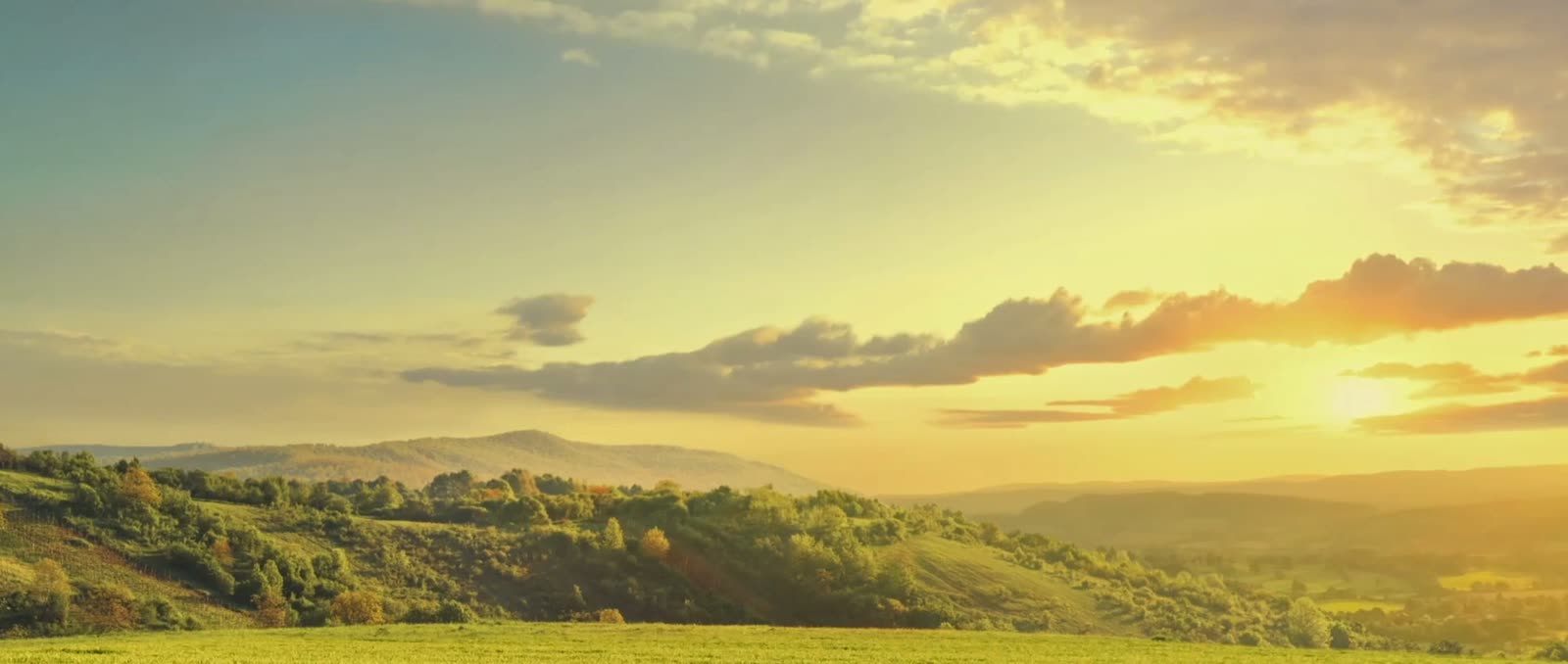




When paint alone will not hold
Nobody can tell when a still frame has been painted flat. Once the camera moves, the problem begins. If the shot travels, if the parallax stretches far, if the eye must pass between objects meant to have depth between them, the flat painting will slip.
When the far mountain moves together with the near rock, the audience interprets the whole frame as a picture hung behind the actors, usually unable to explain why. The solution is to put real geometry underneath: simple forms, built by Chumak Studio to the scale of the scene, onto which the painting is projected. From there, the rest of the build follows.
How a projection build goes together
Geometry is arranged at the scale of the shot instead of the scale of the world, because only what the camera sees has to exist. The painting is projected from the camera position it was painted for, while cards, depth layers and paint remain separate, so altering one does not require repainting all of the others.
If a move runs long enough that one projection gives out, the build uses more than one, and the switch from one to the next sits wherever the cut or the action can cover it. Picking that spot is a judgement call, and this part of the build is what usually determines whether a shot still works in the final week.
Built to your pipeline
A scene that is right on its own but wrong in your renderer has not been delivered. Chumak Studio reads naming, units, scene scale, colour space and pass structure from your pipeline documents, and asks about anything unclear before the build rather than repairing it later.
That conversation is shortened by two public references. What determines whether a scene opens cleanly at your end is the annual set of library versions the industry builds against, and the VFX Reference Platform publishes that set at vfxplatform.com. For scene interchange itself, the usual way a build moves between departments that do not share a package is OpenUSD, which began at Pixar and is now developed in the open at openusd.org.
Only as heavy as the shot needs
The geometry has only one role: to serve the paint. No one else finds a further use for it as an asset or as a standing set, and its viewport appearance is not a concern.
When a build lacks that, it becomes slow. Whoever takes over a slow build simplifies it late, under pressure. Starting with a light scene leaves room for the shot to change in the final week, as it usually does. Deep data is the same trade: OpenEXR (openexr.com) can carry deep samples that make holdouts trivial for a compositor, and the files become much larger, so it is a decision to make deliberately rather than by default.
The full CG path, where the job needs it
Some projects require the subject itself to be exact, not painted. The Roden Ltd. box art stays with the same hands from start to finish: a CAD project arrives, is converted from NURBS to clean topology, then detailed, textured and lit against an HDRI, and rendered in passes for compositing, with the world behind it painted.
Ten years of that work, from 2016 onward, produced a basic working sequence. Model the parts that need to be accurate, paint the parts that need to be believable, and determine which is which before beginning.
Questions producers ask
Do you build to our asset specification?
Yes. Naming, units, scene scale, colour space and pass structure are defined by your pipeline documents, not by a house standard, and ambiguity is resolved by asking before the build instead of by making corrections later.
Do you need our tracked camera?
Yes, for a moving shot: the build must match the tracked camera or the previs. Without that reference, the geometry can only be approximate, and an approximate projection is exactly what makes a shot slide.
What format does the scene arrive in?
Whatever your pipeline already runs is confirmed before the work starts. OpenUSD (openusd.org) is the usual answer for scene interchange, and the VFX Reference Platform (vfxplatform.com) determines whether the versions align on your side.
Is this full CG, or projection?
Whichever method the shot needs, the choice is settled early because it changes the cost. Projection handles most environment work. Full CG covers elements that must withstand close inspection or move independently of the camera.
Can you take over a build somebody else started?
In most cases. The answer depends on the condition of the scene and whether the projections still align with the camera. Chumak Studio checks that honestly before anything else, since taking over a broken build and repairing it can cost more than beginning fresh.
What is needed to quote a build?
The plate or previs, the tracked camera if one exists, the distance the shot travels, what must be exact instead of merely convincing, and your delivery format. The length of the move affects the cost more than the size of the world does.