Short answer: On a production, digital illustration is a single finished image intended for a purpose outside the edit. You use it to pitch a project before the money is in place, to settle what a character or a costume looks like before anyone builds it, and to supply the poster and the press material. It is not concept art, which is produced cheaply so it can be contested and discarded. It is not matte painting, which sits within a shot underneath photography. You commission an illustration when the image itself is the deliverable.
When a producer, post producer or production designer puts that line into a budget, wording is the first obstacle. In meetings, people treat illustration, concept art, key art, visual development and matte painting as interchangeable, but they are separate purchases with different finish levels, delivery formats and schedule points at which each is useful. If a production orders one and is delivered another, it has made the wrong purchase, and the mistake goes unnoticed until the design is expected to be locked.
The jobs illustration is doing on a production
On scripted productions in the United States, the union that represents this work provides the clearest public account of it. For its Illustrators and Matte Artists, the Art Directors Guild, IATSE Local 800, gives this definition of the covered work, in its own words: "Create previsualization through vehicle, creature, character, or scenery concept designs; develop illustrations to communicate the sequence, action, and composition of a scene; and create realistic scenery backgrounds in collaboration with visual effects."
Illustration and matte painting fall under that one classification instead of two, and that matters when a union crew is being budgeted.
Pitch and development art. This is an image created before the project has become a production, for people who are deciding whether to fund it. No part of this has to reflect a real build, because a build does not exist. It has to establish the tone unmistakably at a single glance, in a deck that people scroll through quickly.
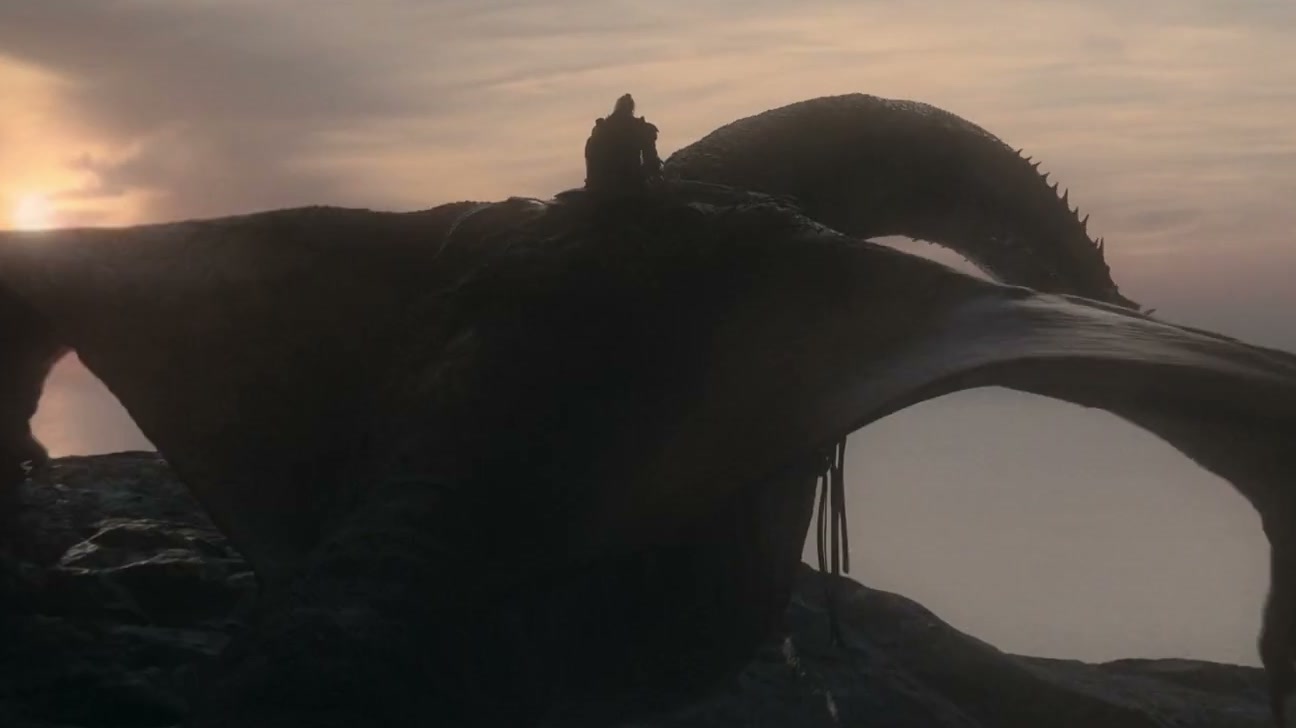
Character, creature and costume illustration. A final image of a person or object, prepared so the design can be approved and handed to whoever will make it, cast it, or model it. A costume department, a prosthetics supervisor and a director can disagree productively about a picture in a way they cannot about a paragraph.
Sequence and composition art. This exists alongside storyboarding, not as a replacement for it. A board is a series of small drawings that shows timing and coverage. A sequence illustration is one frame from that run, painted to a finished level, because a specific beat must be sold to a financier, a network, or a department about to spend real money on it.
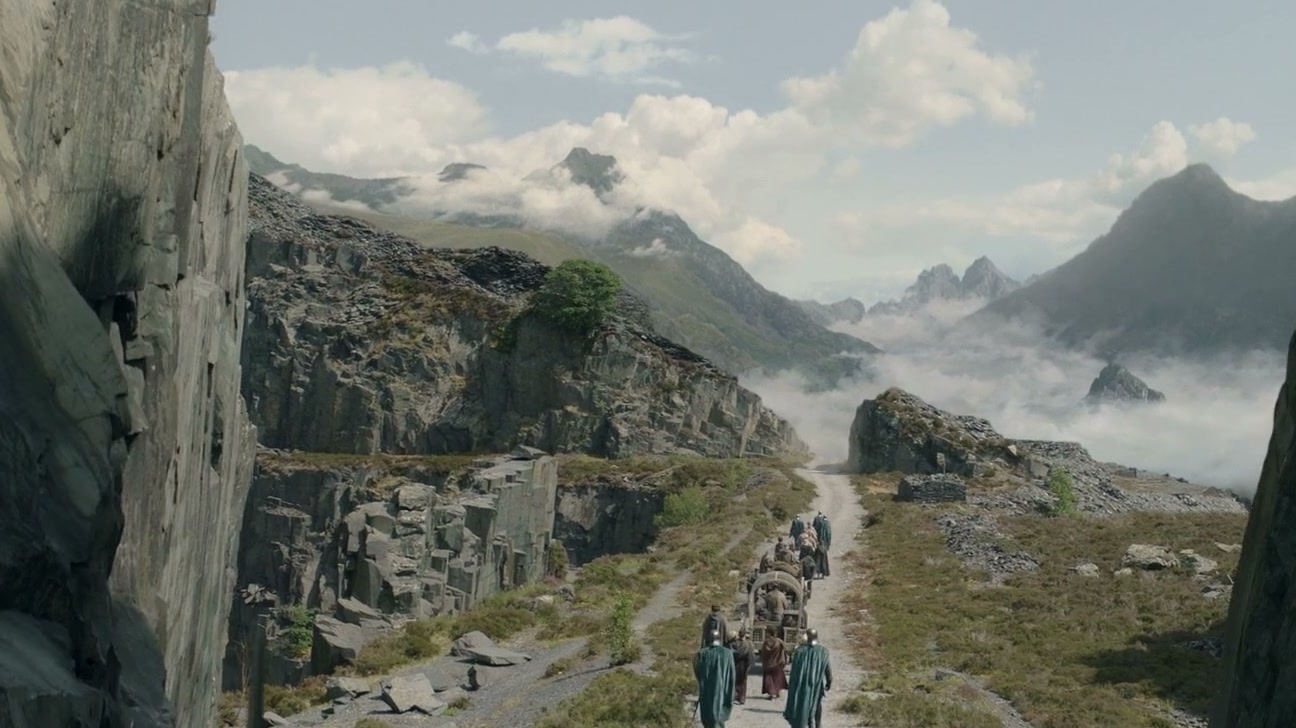
Scenery and environment illustration. This is an image of a place, produced before the place is built or before anyone has decided how to film it. Among the four, it is nearest to matte painting, and this is where the two crafts truly meet.
Productions add a fifth job, editorial and key art, and assign it to marketing rather than the art department. This covers posters, one sheets, packaging art, and the image that goes out with a press release. Productions buy it later, often on a different department's budget, and it is usually the highest finish image the project will pay for, because someone with unlimited time looks at it as a still. It appears as its own service line under CG box art and key art because the audience and the failure modes are different.
Illustration is not concept art, and the confusion is expensive
Concept art is created to be disputed. Its role is to settle what words have left open in a description, and to do it early enough that changing direction stays a conversation rather than a department wide reschedule. A concept needs the minimum finish that still makes the idea credible, because anything more is refinement of something that may well be rejected in the same meeting. The point is speed. Before the decision closes, a rough image shown to a director is worth more than a beautiful one delivered after.
Illustration is meant to be final. The image is where the process ends, not a step along the way. Nobody will composite it into a shot or use it as a base for further construction. The whole job depends on that one image alone, inside one fixed rectangle, before a viewer who can study it for as long as they choose.
Two failure modes follow from this, and both are common.
The first issue is paying illustration prices for concept work. A production orders a fully finished image before settling on a design, then changes direction and has paid for polish on an idea that no longer exists. The actual need was a set of quick, comparable options, which is what visual development produces.
The second issue is the opposite, and it is worse because it appears close to a deadline. A production commissions concept-level work. Then it learns the image is headed for a financier deck, a poster, or a press pack. Concept art is not made for that. The resolution is wrong, the composition was worked out for a conversation rather than a printed page, and the file was never prepared with a second life in mind.
Before a purchase order goes out, ask the one question that prevents both. Is this image meant to help reach a decision, or is the image itself the deliverable? Order concept art while a decision is still open, and order illustration when the image itself is the deliverable.
Illustration is not matte painting
People confuse Digital matte painting with illustration just as frequently, but the difference is one of structure, not quality.
A shot contains a matte painting. Underneath it is a plate that was filmed on a real day with a real lens, and the painted portion has to sit below that photography and match its lens, haze, grain and light. Compositors usually receive matte painting work in layers or passes, sometimes over geometry, and other people downstream grade and finish it.
There is no plate and no downstream for an illustration. Nothing that happens later in the pipeline can save a weak composition. That is why the artist works out composition and tonal structure at small scale before any painting starts, as described on the digital illustration service page. For a buyer, that is the cheapest point at which to make changes. Almost every problem in a finished illustration was already present in the first sketch, so a note at the sketch stage is a conversation, and the same note on the finished painting is a repaint. Ask to see the thumbnails, and spend your attention there rather than on the last ten percent.
A buyer should not count on a matte painting to serve as key art, because such images are created to vanish into the footage rather than hold the eye as a still, and an illustration rarely drops into a shot, since no plate was ever matched to it.
What a production actually receives
Before work begins, request the written delivery specification. Decide it at the start, and changing it at the end is costly.
Settle the destination first. Print and screen are separate tasks, not export variants. The working resolution, the colour handling, and how much detail is worth painting at all depend on the destination. An image made for one and used in the other rarely stays unchanged after the move.
Colour follows the destination. For material that will be printed, ICC profiles handle colour. The International Color Consortium maintains these profiles and states that its purpose is "to promote the use and adoption of open, vendor-neutral, cross-platform color management systems". Work meant for screens usually uses the colour space defined by ITU-R Recommendation BT.709, which the International Telecommunication Union has published under the title "Parameter values for the HDTV standards for production and international programme exchange". Recent productions using wide gamut or high dynamic range rely on other recommendations, so confirm which one your post house expects rather than assuming.
The printer or the platform determines resolution; the artist does not. The working size depends on the poster's final trim size or the pixel dimensions a platform requires. Have that number ready for the first conversation. Decide it late and you get either a soft image or a repaint.
Request the layered file instead of only a flat one. This is the single most valuable item a production can negotiate, and it is commonly forgotten. A flattened image has only one purpose. A layered file allows a second crop for another layout, an extension to a wider format, or a change of one element when somebody wants a different sky; that becomes an afternoon rather than a new commission. Layers may or may not be included in the delivery depending on what was agreed, so the contract should state the terms.
Settle on what counts as a revision. Notes on a sketch and notes on a completed painting require different levels of effort, and studios treat this differently. Ask how many rounds are included and the stages to which they apply.
Mention at the beginning if something must be physically accurate. For a vehicle, an aircraft, or any piece of equipment based on a real drawing, expect to build and render part of the image instead of painting it freehand. Accuracy determines the working method more than size does.
Purchase the rule set before the images when several images must appear as one world. The rules set light, palette, and scale, and that is what art direction means here. If you lack that rule set, three good illustrations by three good artists will not look like one show.
Who owns the finished image?
The useful form of the question includes three added details: the territory, the length of time, and the permitted uses. People usually put it off until someone needs the answer, and by then there is nothing left to trade.
In Canada, the baseline rule puts ownership with the artist. Section 13(1) of the Copyright Act provides that "the author of a work shall be the first owner of the copyright therein", except as the rest of the Act specifies, and it sets out a separate rule for work created in the course of employment under a contract of service. Since a freelancer working on commission is not usually an employee, the written contract decides who owns a commissioned illustration; if the contract is silent, ownership may not end up where the production expected.
That same section prescribes the form a transfer must take. Section 13(4) states that "no assignment or grant is valid unless it is in writing signed by the owner of the right in respect of which the assignment or grant is made", or by an agent with proper authority from the owner. A purchase order that never mentions copyright does not transfer it, and neither does an understanding reached in a meeting. Because other countries apply different rules, consult a lawyer rather than a blog if the work crosses a border.
Copyright ownership is not the final step either. The author also receives moral rights under Section 14.1 of the Act, including the right to the integrity of the work. The section provides that "moral rights may not be assigned but may be waived in whole or in part" and that "an assignment of copyright in a work does not by that act alone constitute a waiver of any moral rights". A production may hold the copyright and still be restricted in how far it may change the image or connect it to a product unless a waiver was also obtained.
Before any work begins, put the scope in writing: the poster alone or all marketing, merchandise or not, a time limit or not, a layered file or not, a waiver or not. None of it is hard to discuss at the start, and all of it becomes hard to discuss later, when someone wants to place the image on a boxed release.
If you are still not sure what you need
Chumak Studio, based in Toronto, creates environment paintings and standalone finished images for film and television. If you have a brief and are unsure whether it calls for illustration, concept art, or a matte painting, send it along with the intended destination of the image, and you will get a direct answer about which one it is, even when the answer is that you need none of them yet. The digital illustration page explains the process. Contact is where you send the brief.