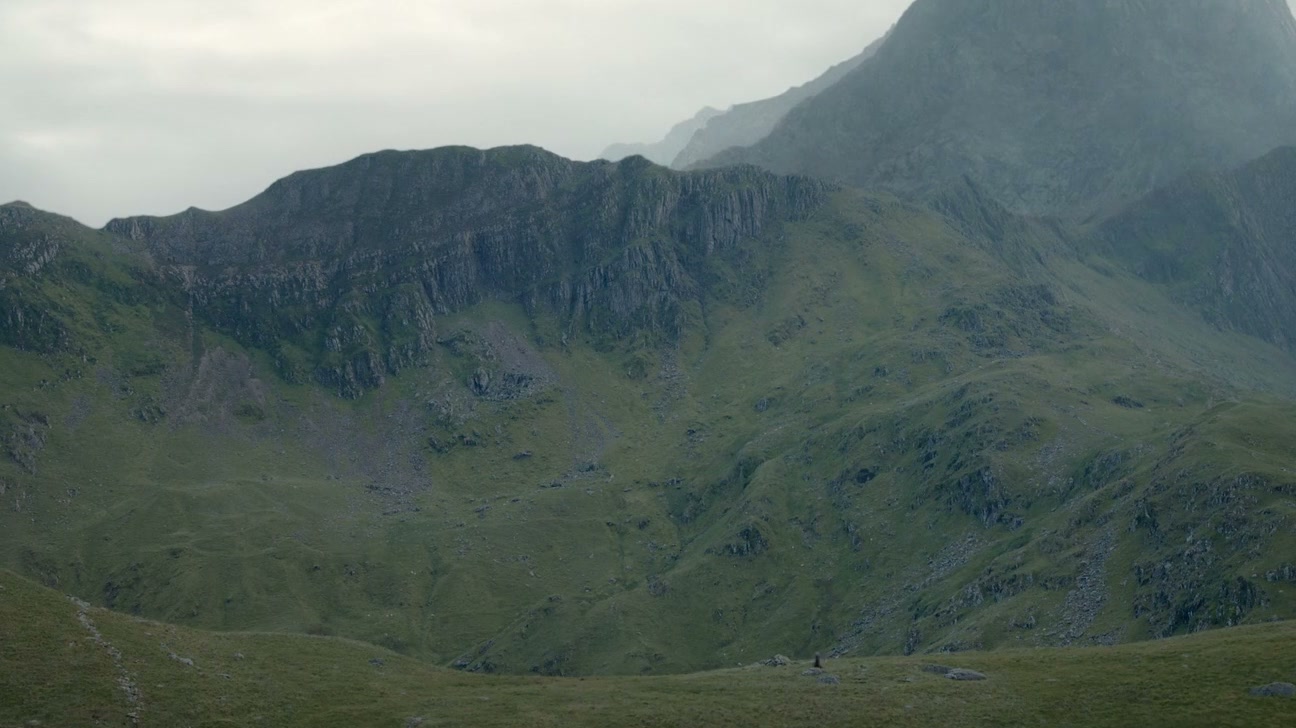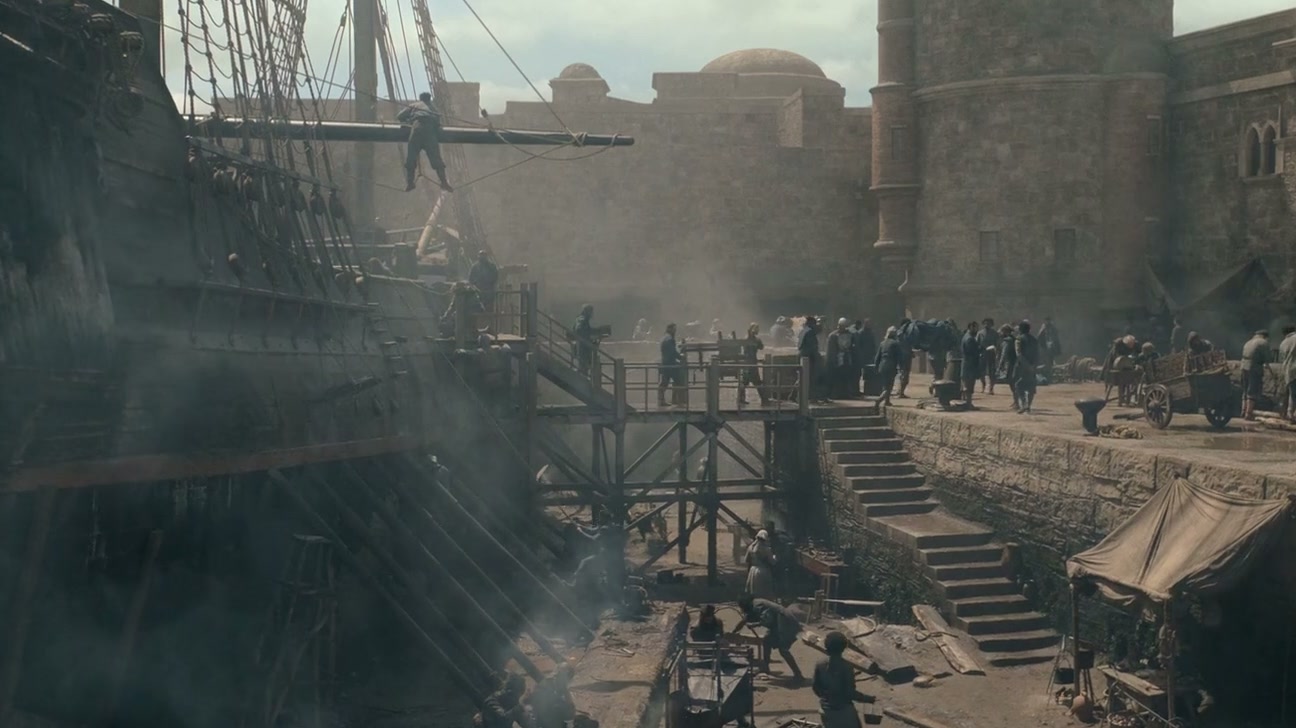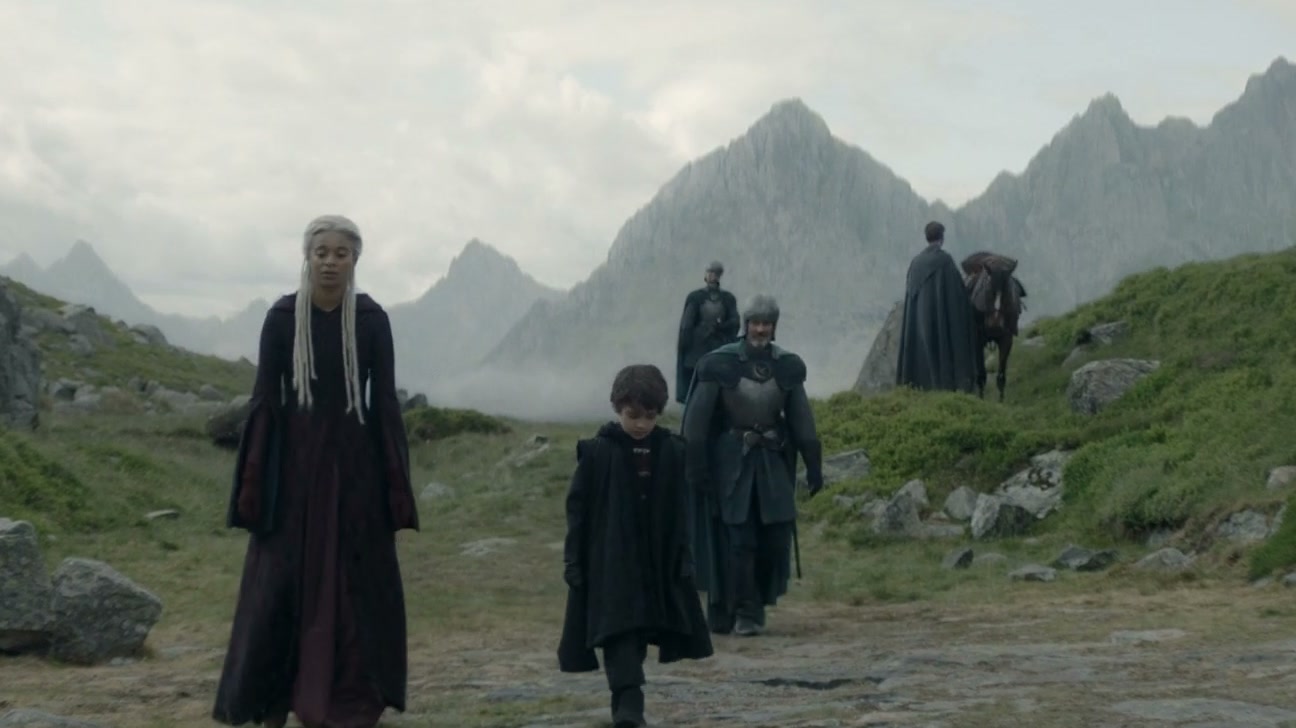
Short answer: Many of cinema's best-known images are paintings. For most of the last century the painting rested on a pane of glass before the lens, covering the part of the frame the camera could not photograph. The jungle of Skull Island, the Himalayan drop in Black Narcissus, the London of Mary Poppins and the last shot of Raiders of the Lost Ark were all created that way.
This is a historical account, not a how-to. For a straightforward description of the role, see what is a matte painting.
Two themes appear throughout the text below. The method was selected for each shot, not per studio, then and now. And a single matte-painting lineage links the Himalayas of 1947 to the rooftops of 1964 to the ice planet of 1980.
The technique starts with a pane of glass in 1907
Made in 1907 by Norman Dawn, Missions of California was the first film to use a glass matte painting to augment the scenery. He positioned a painted sheet of glass between the camera and the live action, so the painting and the scene were recorded on the same film at the same moment.
Next came the refinement that made the technique general. Instead of painting the finished picture, the artist painted over a section of the glass in black, because the flat black paint keeps light from reaching the part of the film it covers and stops the second exposure from doubling over the live action already on the negative. That left a blank opening in the exposed film, to be filled later. The film waited in a can while somebody painted, and this is how the craft worked for seventy years and why a matte shot was cheap.
The matter was worth contesting. Dawn received a patent for the process in 1918 and filed an infringement suit three years later. The defendants, matte artists including Walter Percy Day, countersued, maintaining that masking and double exposure were already conventional, and Dawn lost. Keep Day's name in mind.
Skull Island was sheets of painted glass, stacked
In the 1933 King Kong, the jungle is neither a location nor a set. The film's entry states that the jungle scenery was created by layering glass paintings produced by Mario Larrinaga and Byron L. Crabbe. The matte history site Matte Shot counts the deepest of those setups: as many as four planes of painted glass and a painted backing in the distance.
What matters is stacking. A single sheet creates a flat backdrop. Four sheets at four distances give depth, because near and far move across the frame at different rates. Most projection setups on environment work today compute that arithmetic in software.
Chaplin skated beside a painted drop
Blindfolded, the Tramp in Modern Times roller skates toward the edge of a department store balcony with a long fall below. The film's entry notes that the drop was created with a matte painting and Chaplin was never in real danger, since he skated on a bare floor with a ledge marking where to stop.
It is here because of its flaw. At one moment, the same entry observes, Chaplin's back wheel briefly vanished behind the painting. That is how the technique fails in one frame: the painted edge and the real edge stopped agreeing, and something that belonged in front moved behind. It still gives away a bad environment shot, and it is still an edge problem.
The Himalayas of Black Narcissus were painted at Pinewood
The setting of Black Narcissus is a convent high in the Himalayas, on a cliff. The picture was filmed mainly at Pinewood Studios, and the precipice is W. Percy Day's work. He was one of the men who had beaten Dawn's patent twenty-five years earlier.
The Studiotec research project cites Jack Cardiff's description of the method: covering the unusable areas of the frame very precisely with black card, then taking a second exposure of the painted glass with mountains and clouds.
It also cites Day, in a 1948 trade paper, on where he placed the join. The matte must not extend into any part of the image where action occurs, it has to leave space for anything that moves, like clouds, and the matte line should run along dark shapes, such as shadows.
This is still true. A join stays hidden in shadow, becomes obvious in a highlight, and requires rework when it is laid over something that moves.
The London of Mary Poppins was painted in Burbank
Those rooftops and skyline are not London itself. Mary Poppins was filmed in full at the Walt Disney Studios in Burbank, California, with painted backgrounds of London. Peter Ellenshaw created the matte paintings. The Disney archive states that he was employed in a garage when he encountered Walter Percy Day, a matte artist who offered him film work, and that his previous work included Black Narcissus before Disney brought him to Hollywood. The Himalayan cliff and the London rooftops came from a single workshop, separated by an apprenticeship.
The dancing-penguins sequence did not involve a bluescreen. The actors were filmed in front of a white screen lit by sodium vapour lights, which give a yellow tint, and a prism divided that light onto a second reel. The matte was clean enough to carry the light through the costume's partly transparent veil. Paint solved the world, a lighting decision solved the edge, and those remain two different problems.
Seventy paintings on glass for one Star Wars film
By 1980 the technique had reached industrial scale without any change. StarWars.com documents that three artists from Industrial Light and Magic produced seventy matte paintings for The Empire Strikes Back: Ralph McQuarrie, Michael Pangrazio and Harrison Ellenshaw, identified there as the son of Walt Disney's selected matte painter, Peter Ellenshaw. That puts Day's line at three generations. They painted with acrylic and oil on rectangular glass sheets held in frames; the ILM story says that shower doors bought from hardware stores made the best surface.
One sequence moved backwards: problems with blue screen photography led the ILM artists to adopt a traditional method for the Battle of Hoth, partly drawn from Willis O'Brien's work on King Kong. The stop-motion walkers were photographed right in front of painted backdrops, the largest 35 feet wide. Forty-seven years after Skull Island, with ILM's optical department down the hall, the solution was a painting behind the model again. Dennis Muren, quoted in that article from Cinefex about why painted backgrounds fell out of use: "that's just because they don't have the right artist to do it."
The last shot of Raiders of the Lost Ark is a painting
The closing warehouse sequence in Raiders of the Lost Ark, the first Indiana Jones film, consists of a glass painting by Michael Pangrazio at ILM paired with live-action footage of a government worker pushing the crate up the centre aisle.
His technique for getting the light right merits imitation. Editor Vashi Nedomansky's account describes three months of painting on a sheet of glass placed directly before the camera, with the live action photographed through a hole in it.
The same description lays out the method. Pangrazio lined up rows of wooden boxes, lit them, took a reference photograph, then projected that slide as a guide. The way light falls off along a receding row of crates cannot be invented, so he built a crude version and painted from it. Rough in the geometry, light it, project it, paint over it. That 1981 account describes what a matte painter still does, with the boxes now inside a 3D scene.
The glass stayed. The join went digital
Two claims exist about where digital matte painting starts, and they are worth keeping apart. According to ILM's account of Young Sherlock Holmes, for the opening shot of the stained glass knight in 1985, matte artist Chris Evans produced the first CG image used as a film background. Ian Failes, in VFX Firsts at befores & afters, identifies an earlier one: the terraforming planet in the Genesis sequence of Star Trek II, 1982, which ILM artist Chris Evans painted using an early digital paint program that Tom Porter built. Three years earlier, the same painter.
Muren's point about the knight remains valid. ILM could not yet generate motion blur, and blur is what makes a moving element blend with the plate: "I didn't want the stained glass knight to look like it came from ILM, that it was stuck onto the background."
Compositing was added afterward, and the cost details are on record. befores & afters reports that the airport pullback that ends Die Hard 2 in 1990 is "often touted as the first time that digitally composited live-action footage was used with a traditional matte painting". Bruce Walters, then supervisor of ILM's matte department, told befores & afters why: parking real aircraft would have required around $40,000 a night per plane, before crew, lights and the permit.
Yusei Uesugi's painting did not have even detail. Walters describes how Uesugi determined the smallest area he could paint while still matching the plate, about twelve inches wide at the centre where the pullback starts, and then used less detail as the shot zoomed back. How far the camera travels determines how much of the frame has plate-level detail. The rest can be cheaper.
Then the painting learned to move
For a painting on glass, the camera has to stay fixed. Projecting the painting onto simple geometry freed it, letting a virtual camera move through it.
At that time a computer graphics supervisor at ILM, Stefen Fangmeier told vfxblog he had performed that work for Hook in 1991, by projecting Yusei Uesugi's Neverland painting onto simple island geometry, in what vfxblog calls the first time a dimensional matte painting like that had been seen on film.
His account of the move is where the limit lies. He says the island starts tilted away from camera, which was possible because he "wasn't showing any part of it that wasn't painted". A projected painting's camera movement is limited to what its coverage permits, and not one degree more.
What a large environment looked like by 2002
In The Lord of the Rings films, painting is no longer the complete answer. Helm's Deep in The Two Towers took the form of a quarter-scale miniature fifty feet wide, employed for forced perspective and the major explosion sequence, and in The Return of the King the Minas Tirith set was assembled from parts of the set of Helm's Deep while the wide shots used miniatures. A painting is one layer there, alongside set, miniature, photography and render.
Why does any of this matter if I am buying a shot now?
Because each decision above was made for a single shot, and still is. Nobody at Pinewood picked painting as the house style. They had a cliff they could not reach and a camera that did not move. Since the camera moves and the object must come apart, Helm's Deep is a miniature. Die Hard 2 is a painting, since an actual aeroplane would have cost forty thousand dollars a night.
Day's rule about the matte line, Uesugi's twelve inches of full detail and Fangmeier's island that could not be turned further form a single question asked in three decades: what does the camera actually do in this shot. When a vendor names a method before hearing the move, they describe their pipeline, not your shot. Painted work is the right choice for some frames, a full CG environment for others, and the drawing that resolves the argument is concept art, finished at a different point in the schedule.
Who does this
Based in Toronto, Chumak Studio creates painted environments for film and television; the service it provides is digital matte painting. Anastasiia Chumak is the artist, and her credits list spans 2017 to 2026. On House of the Dragon, she appears as "Senior matte painter, Pixomondo".
When you have a shot but are unsure what it requires, send the frame and you will receive a direct reply on whether this is the correct tool for it.