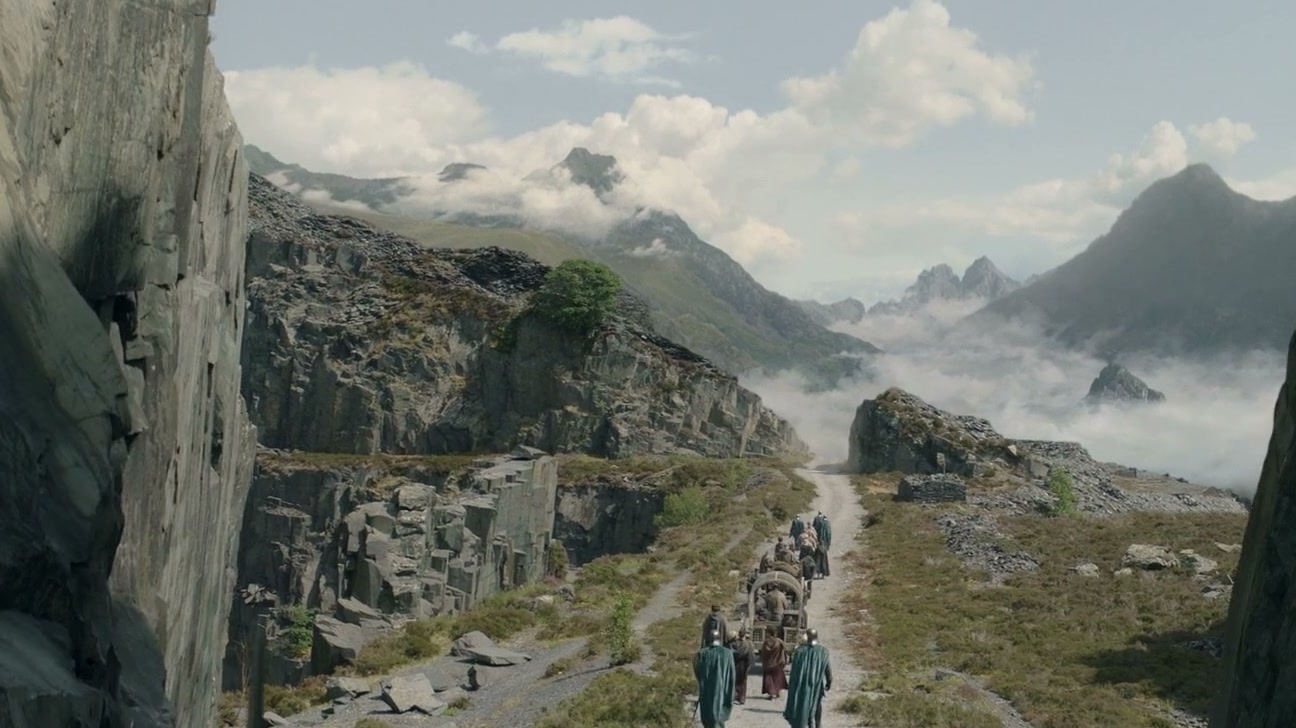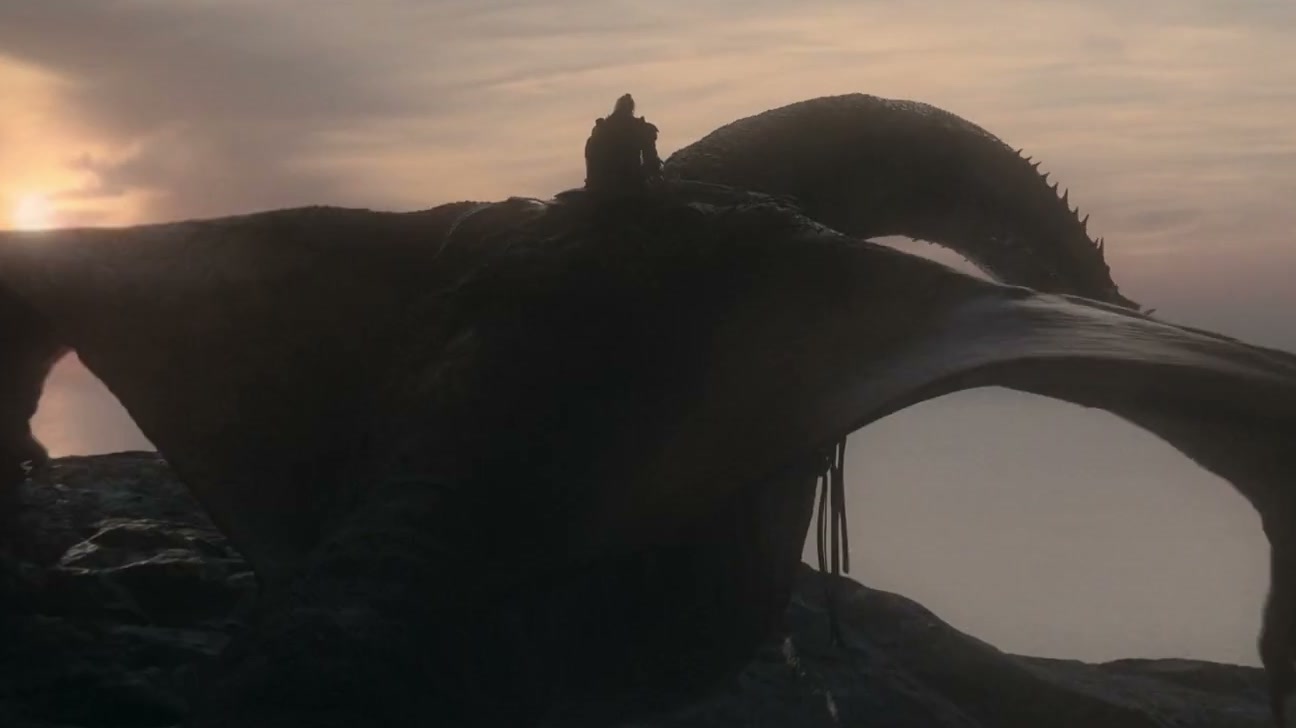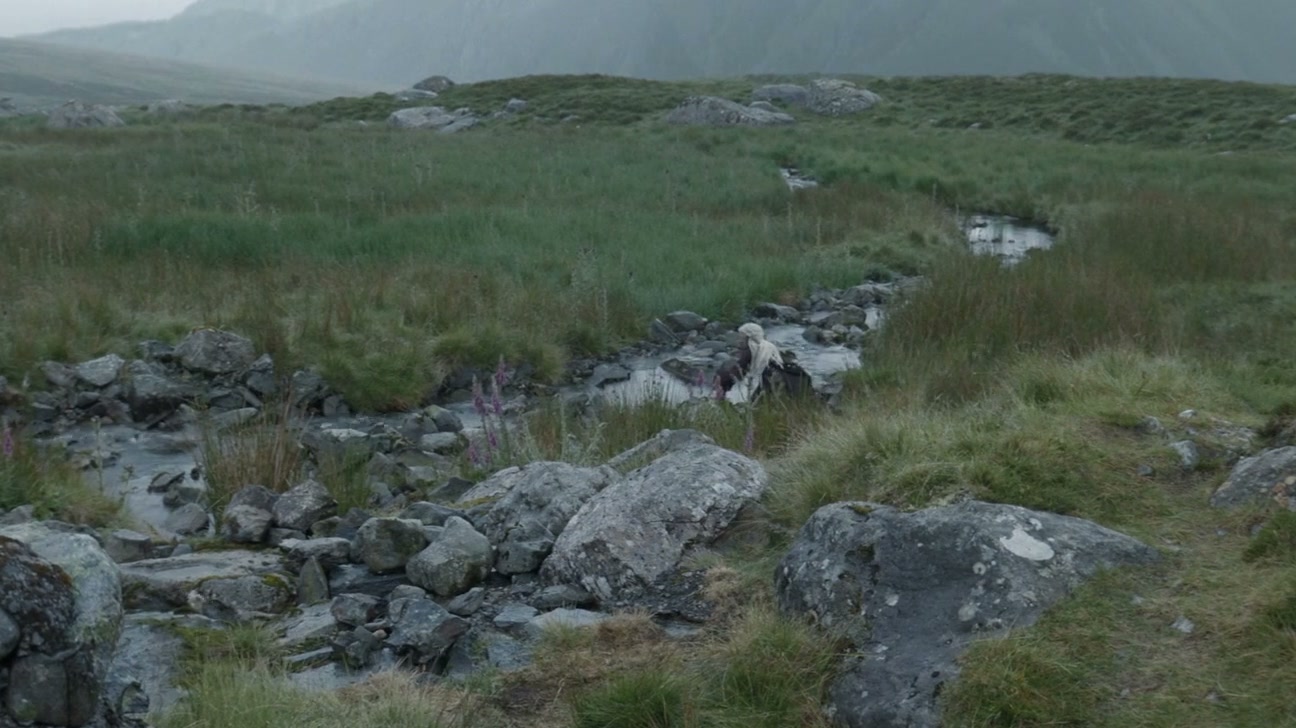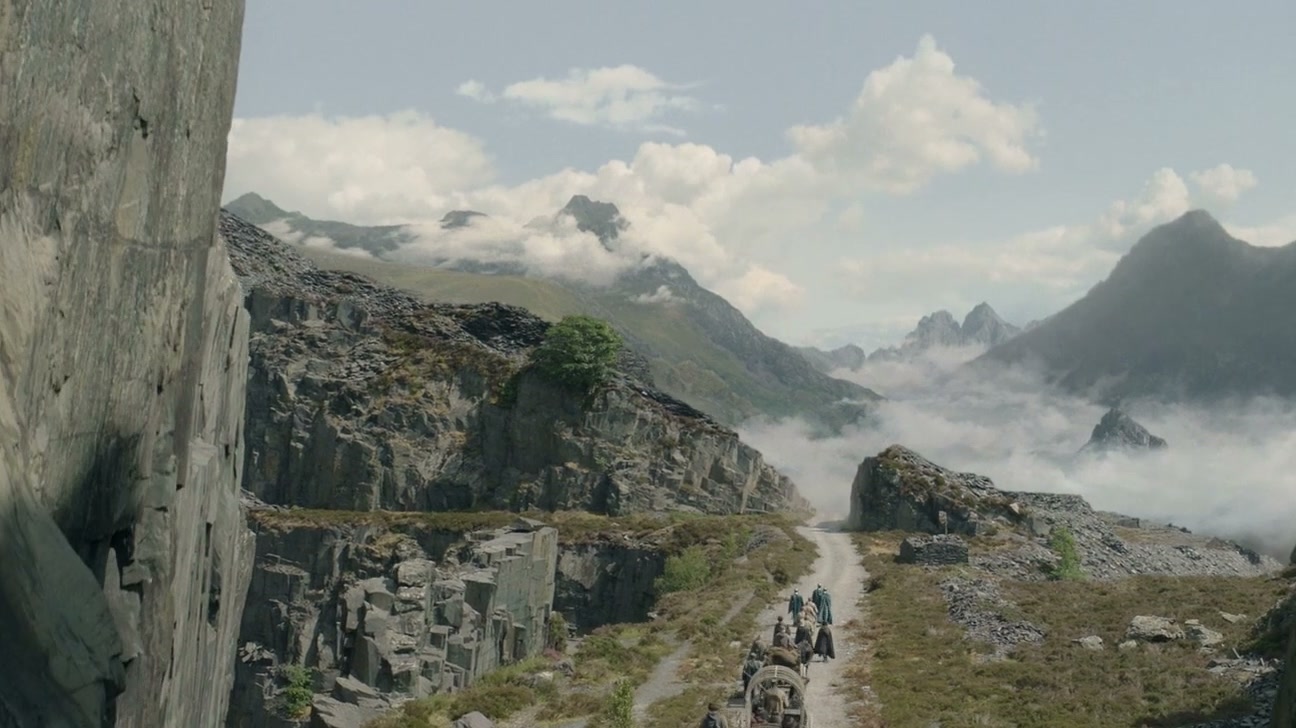
Short answer: A matte painting is a painted environment built to sit inside a filmed shot so that the audience reads it as a real place the camera happened to find. It used to be paint on glass. Now it is a photographic-quality image assembled from painting, photography and geometry, delivered as a finished plate at the resolution the film ships at.
The word is old and the job underneath it has changed twice. That matters if you are about to hire someone to do it, because a matte painting in 1980, a matte painting in 2005 and a matte painting today are three different products, and the price and the schedule follow the one you actually need rather than the one the word suggests.
This is what the job is now, what it is not, and where the difficulty actually sits.
Where the name comes from
It began as glass. A painting on a sheet of glass, set up in front of the lens with a hole left in it, so the camera photographed the live action through the hole and the painting everywhere else. The painted part and the filmed part arrived on the same piece of film at the same moment. The word "matte" is the mask: the part that blocks, so something else can fill it.
The glass is gone. The word survived because the problem did not change. There is a piece of frame the production cannot photograph, either because the place does not exist, or it costs too much, or it is on the other side of the world, or it burned down four hundred years ago. Something has to fill that piece of frame and it has to belong there.
What a matte painting actually is now
A finished image, at delivery resolution, that occupies part or all of a shot and reads as photography.
It is usually built from three kinds of material at once. Painted work, made by hand. Photographic material, taken apart and rebuilt until it stops being the place it was photographed in. And geometry, meaning simple three dimensional forms that the painted and photographed material is projected onto, so the image can hold up when the camera moves through it rather than sitting flat behind a locked-off frame.
The proportions shift with the shot. A distant mountain range behind a hero on a hill can be almost entirely painted. A city street extended upward by twenty storeys is mostly photographic material, rebuilt. A camera that flies through a canyon needs enough geometry underneath it that the parallax is real, because the eye catches a flat card moving before it can explain why.
What does not shift is the requirement. It has to survive being cut next to a shot that is entirely photographic, on a screen larger than the one it was made on, in front of an audience that has been looking at real places their whole life.
What it is not
It is not concept art. Concept art decides what a place will be. It is made early, it is made to be argued about, and its job is to get a decision out of a room. A matte painting is made late and its job is to be in the film. Different skills, different people, opposite ends of the same pipeline. A production that asks for one and receives the other has lost a month, and this is the single most expensive confusion in this part of the industry. If what you need is the drawing that settles the argument, that is concept art. If what you need is the frame that ships, that is digital matte painting.
It is not a full CG environment. A full CG build models the place, textures it, lights it and renders it, and it can be shot from any angle afterwards. A matte painting is built for the camera it is going in front of. That makes it faster and cheaper for the shots it suits, and useless for the shots it does not. The honest question to ask a vendor is which one your shot needs, and a vendor who answers "CG, always" is selling you their pipeline rather than solving your shot.
It is not a filter or a preset. There is no version of this that is applied. Every one is built for one frame, from that frame's lens, at that frame's hour of day.
Where the difficulty actually is
Not the tools. This is the part that surprises people paying for it.
The tools have been stable for years and they are not the constraint. The constraint is judgement about three things, and none of them are technical.
What the place would actually look like. At that hour, in that weather, from that lens, at that altitude. A painted city with the sun in the wrong place relative to the plate reads wrong instantly, and nobody in the audience can say why. They will say the shot looks fake. What they mean is that the light disagrees with itself.
What the audience will forgive. Some inaccuracy is invisible and some is not. An architecturally impossible skyline can pass unnoticed. A haze falloff that does not match the plate cannot. Knowing which is which is most of the craft, and it is learned by having been wrong on a delivered shot in front of a supervisor.
What the shot is for. A frame the audience looks at for eleven seconds while two people argue in front of it needs less than a frame the camera holds on for four seconds with nothing else happening. Painting to the same finish everywhere is not thoroughness, it is a misuse of the schedule.
Why the camera moving changes everything
A locked-off frame can be a flat image. The moment the camera moves, the image has to have depth in it, because the near parts of a real place move faster across the frame than the far parts do.
That is why modern matte painting involves geometry at all. The painting is broken into layers and projected onto simple forms at the right distances, so a small camera move produces the parallax a real place would produce. It is not a full three dimensional build. It is enough depth for the move that shot actually makes, and no more.
This is also where a job quietly becomes expensive. A shot that was quoted as a painting and then receives a camera move in the edit is a different shot. If the move is known early it costs very little to plan for. If it arrives after the painting is finished, a lot of the work has to be rebuilt. Telling your vendor about the move before they start is the cheapest thing on this list.
What should I actually ask for when I brief one?
Five things, and they are all knowable before anyone paints.
The plate, or the closest thing to it, including the lens. The time of day and the weather you intend, stated rather than implied. Whether the camera moves, and how much. What the audience is supposed to feel about the place, in one sentence, in ordinary words. And how long the shot is on screen.
That is enough for a real quote. What is not enough is a reference image and the word "epic". A reference image tells an artist what you liked. It does not tell them what your shot needs, and the gap between those two is where revisions come from.
Who does this
Chumak Studio paints environments for film and television, in Toronto. The artist is Anastasiia Chumak, an art director and matte painter with film and television credits since 2016, including senior matte painter at Pixomondo on House of the Dragon, senior digital matte painter on Chief of War and on Marty Supreme at Folks VFX, and senior matte painter on The Penguin.
If you have a shot and you are not sure which of the things above it needs, send the frame. You will get a straight answer about whether this is the right tool for it, including when it is not.