Short answer: Ontario, British Columbia and Quebec accounted for 91 percent of Canadian film and television production volume in 2024/25, excluding broadcaster in-house work. Each of those provinces also offers a tax credit targeted specifically at digital animation and visual effects work, so studios build their teams and do most of their hiring in Toronto, Vancouver and Montreal. You can obtain concept art from a staff artist, a freelancer, or a studio that handles the entire package. The brief matters more than the option you pick, and what most often stays unresolved is not the fee but who owns the drawing afterwards.
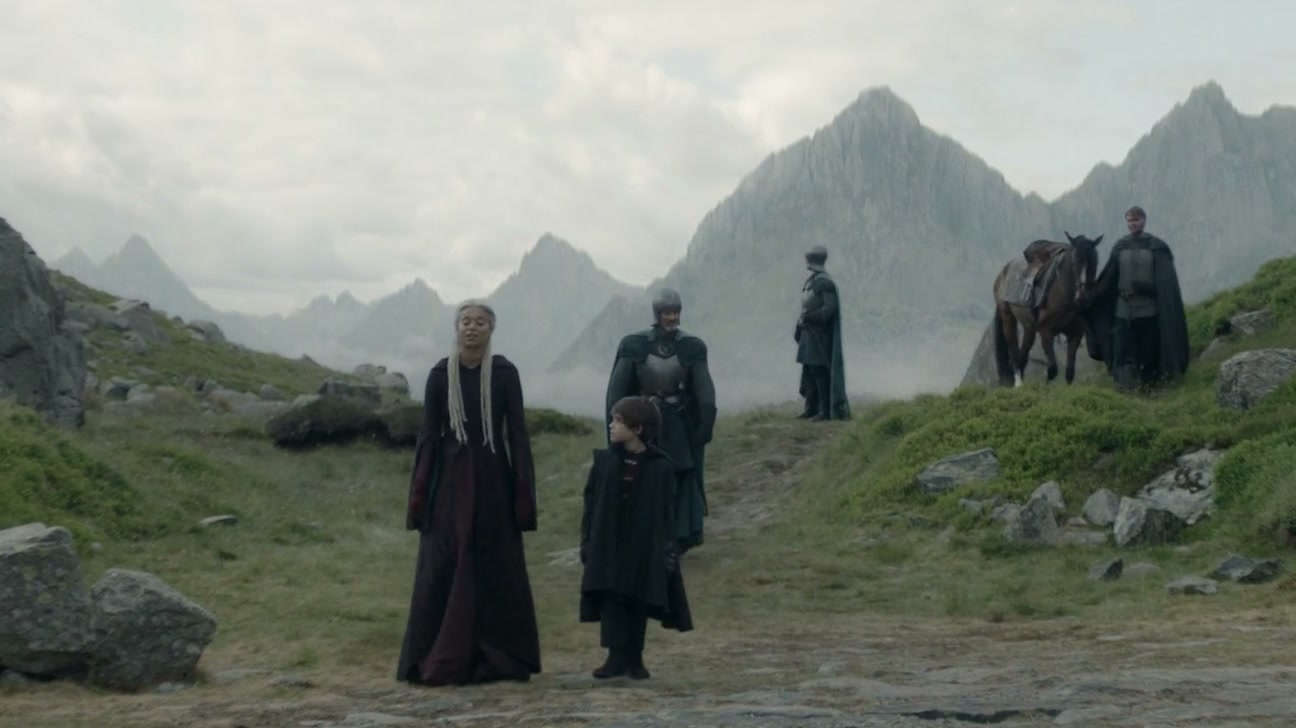
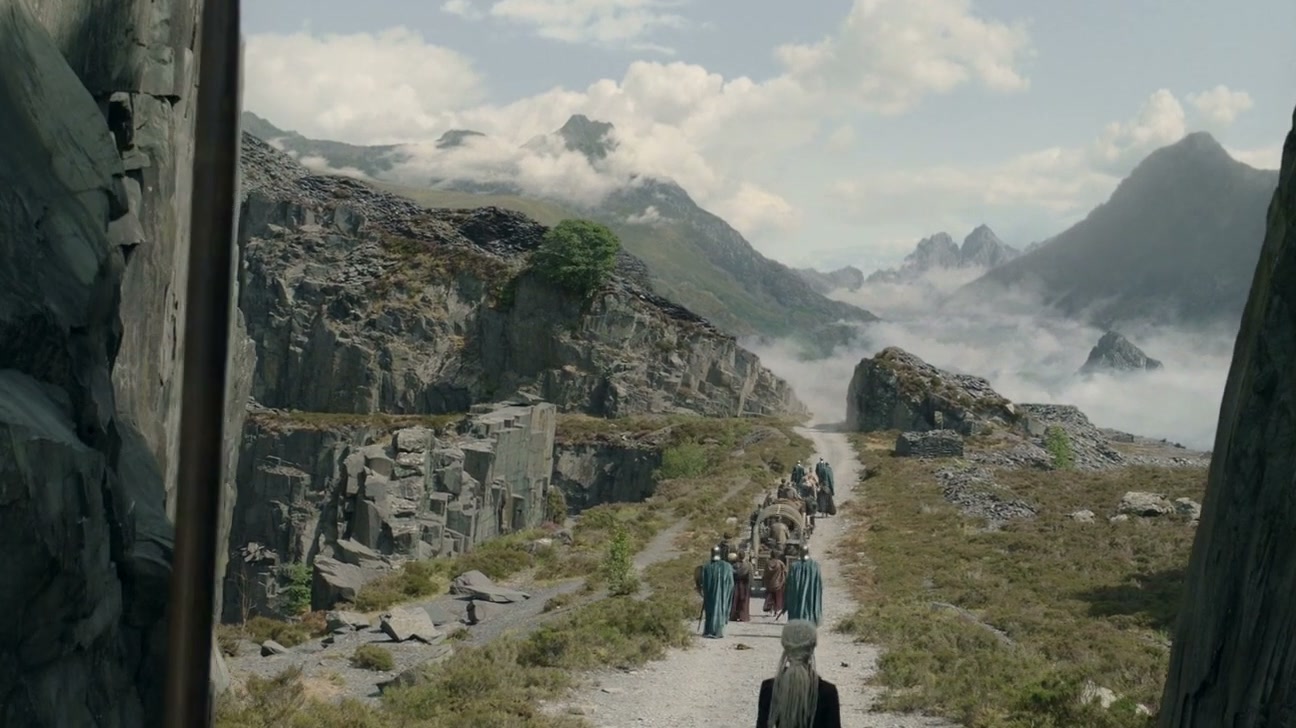
Concept art is a drawing used to settle an argument. No place can be built, scouted, budgeted or shot until someone has agreed on its look, and the drawing is how that agreement is reached. It is not the final frame that appears in the film, and if you cannot tell the two apart when buying, that difference is worth ten minutes before you give anyone a brief. Buying the wrong one costs a schedule. The rest of this page covers buying, not drawing.
Where the work is, and why it stays there
Production in Canada is concentrated, and concept art tracks it. For 2024/25, total Canadian production volume excluding broadcaster in-house work is $8.94 billion, according to the Canadian Media Producers Association's Profile 2025 summary: $3.16 billion in Ontario, $2.60 billion in British Columbia and $2.41 billion in Quebec. Those three provinces account for 91 percent of the money. Studios hire in the places that receive the money, artists move to wherever those studios are hiring, and the schools supply the same three cities. Each of those provinces also offers a credit for the exact type of work that concept art is next to.
Ontario operates the Ontario Computer Animation and Special Effects Tax Credit, a refundable credit calculated from eligible Ontario labour expenditures for qualifying computer animation and special effects activities. The listed activities are "designing, modelling, rendering, lighting, painting, animating and compositing", and qualifying corporations "may include animation or visual effects houses, post-production houses and film and television production companies".
Two details on that page change the way a producer should consider a single hire. Payment for the labour has to go to Ontario residents who report to a permanent establishment of the qualifying corporation in Ontario, so the physical location where the artist works counts as part of the test, not as a formality. Qualifying labour is not limited to salaried staff: the page lists freelancers who are individuals, partnerships, or arm's-length incorporated individuals, which is the loan-out company that most working artists invoice through. A freelance invoice does not automatically fall outside the credit.
British Columbia's production services tax credit consists of five credits. One of them applies to digital animation, visual effects and post-production, and its value is calculated from qualified British Columbia labour expenditure. The province says the credit is open to both domestic and foreign producers and requires no Canadian content.
Quebec operates under different rules, and the distinction matters if you assume all three provinces reward the same thing. SODEC and Revenu Quebec jointly administer its refundable tax credit for film or television production services, which applies to all-spend production costs, meaning qualified labour plus the cost of qualified properties, for services provided in Quebec. An increased rate then applies to expenditures for computer-aided animation and special effects, and that increase is calculated on qualified labour cost. Unlike the effects uplift, the base is not a pure payroll credit.
Two points follow. Use the cluster to identify where to look, not where the work has to happen: concept art is created early, before a plate exists, so sending it over a wire is easier than sending anything else in the pipeline. Also, if your production is claiming a provincial credit, the artist's location and employer can affect whether that spend counts. The rules change often. The last update to British Columbia's page was in August 2026, and it includes four changes from that year's budget alone. Check the current page and then consult your production accountant before engaging anyone.
Staff, freelance, or an outsourcing studio
Three shapes, and they fail in different directions.
A staff concept artist stays on the production payroll, usually in the art department. You gain a person who learns the show, stops needing constant direction, and is in the room on a Tuesday when the director changes course. You pay for a set block of time whether design work consumes all of it or not. That is the right choice when design lasts for months and one world must remain consistent across many drawings, which is really visual development rather than a single picture.
A freelancer is a single artist you engage directly. Work begins quickly, there is no coordination layer, and you receive the particular hand and taste that prompted your call. The risk is that everything depends on one person: one illness, one overlapping show, one crunch on a job they accepted before yours, and there is no backup. This works well for a handful of images in one consistent voice.
An outsourcing studio receives a package and distributes it. You get a producer, scheduling, cover when someone is sick, and a single invoice. What you lose is some closeness to the individual maker and some early speed, since the brief now moves through another person. That is when the volume is real or the date is immovable.
The costly mistake is choosing a form that does not match the problem. When the real need is a single designer's input, buying a studio package adds process to work that called for a conversation. Hand a freelancer a volume that required a producer, and you get a polished first third followed by a miss. The more subtle error is hiring an artist for the style in their portfolio and then briefing them away from it. If you want their hand, direct the brief toward that hand.
What the brief has to settle
Nothing disappoints more than concept art done correctly for a brief with too little detail. For briefing a finished painting, a longer write-up is available; for a concept brief, seven points are what matter.
- The decision. Say what this picture must settle, and who signs off on it. No other sentence in a brief is more useful, and it is the one most often absent.
- The stage. Is this early exploration, or an image that will go in front of the director on a fixed date. Different jobs need different finish levels.
- The story reason for the place. Leave the plot aside. Explain why the audience is in this place, and what the location must make them feel.
- What is already true. A location scouted, a set budgeted, a costume made, a lens chosen. Limits named at the start cost little. Limits disclosed in round three are a redraw.
- References, each with a reason. A folder of pictures with no note attached is just noise. A single picture labelled "this light, not this architecture" is worth twenty unmarked ones.
- Scope in numbers, and a date with a consequence. Specify the number of images, the number of variations, and the rounds that are included, and say what occurs on that date. A date with no consequence tied to it is only a suggestion.
- What happens to the image afterwards. An image intended for a pitch deck, one given to a construction coordinator, and one that turns into a digital matte painting or a built 3D environment require different levels of internal consistency.
Also use that last bullet to decide which file to request. Before the artist starts, ask any visual effects vendor that will receive the image what they want. The Academy Color Encoding System is free and open source. Its documentation cites the removal of "ambiguity in communication of image files in multi-vendor workflows" as a reason to use it, so a show already using ACES can resolve the colour question by naming its configuration. OpenEXR is an Academy Software Foundation project that represents "high-dynamic-range scene-linear image data". Its documentation calls that a significant difference from most image formats, which store images ready for display. Ask for the layered source file as well, or accept a redraw when somebody wants a building moved.
Identify the person the artist asks when the brief is unclear. An artist who must guess will guess. If the answers to several of these do not exist yet, that is something to know before you commission anything.
Rights and credit, settled before the first sketch
Most producers assume this was dealt with in the invoice. In Canada, that usually was not the case.
The Copyright Act provides that the author of a work is the first owner of the copyright in it. Employment is the exception. When the author created the work while employed under a contract of service, the employer becomes the first owner, "in the absence of any agreement to the contrary". A commission does not create an employment relationship. That section also provides that an assignment or grant is invalid "unless it is in writing signed by the owner of the right". Under a plain reading, the drawing belongs to the freelance concept artist unless a signed written agreement says otherwise, and payment of the invoice does not by itself transfer the copyright.
Moral rights exist separately from copyright, and producers who think they have dealt with this can still be caught by them. Their scope includes the integrity of the work and the artist's right to have their name attached to it, and the Act states that they "may not be assigned but may be waived in whole or in part". It also states that an assignment of copyright "does not by that act alone constitute a waiver of any moral rights". A contract that assigns copyright and does nothing more therefore leaves the moral rights unchanged.
If the production plans to crop, recolour, composite or repurpose the image later without reopening the conversation, the waiver has to be written and has to appear as its own clause. The Act contains more than these few lines, and a production lawyer should go over it with you. The issue needs to be part of the discussion before work starts, not something dealt with in a scramble at delivery.
Credit is the less expensive half of the same discussion, and people forget it more often. Settle how the artist is named, whether they may show the work in a portfolio, and the effective date. Until release, confidentiality is the norm. An artist whose next job depends on a portfolio pays a real cost for a permanent ban on ever showing the work; if you do not raise it, they quietly price it in.
What should I ask an artist whose portfolio looks good?
The ceiling is what a portfolio displays. The floor is what these questions display, and that is what you actually buy.
1. Which parts of this image did you do, and what was the brief? Honest replies usually come fast because most work is shared. A vague reply is the answer. 2. How many rounds did that piece take, and what changed between them? The reply shows how they respond when told no. 3. Can you show me a rough from an early round? The polished frame sells the idea. The rough frame shows the process. 4. Can you show me something in a style that is not yours? If your show already has a look, no other question matters more than this one. 5. What did you deliver, in what format, and to whom? Anyone who regularly sends files to a vendor will answer this without pausing. 6. What is booked across my delivery window? Do not ask if they are available. Ask what specifically overlaps your delivery window. 7. Tell me about a job that went wrong. Every artist has one. If an artist cannot name one, they have either done little work or will not tell you when your job goes wrong.
Five of those seven concern process, not drawing. A portfolio shows skill, but reliability stays hidden, and reliability determines whether the picture reaches you on the day you need it.
Before you go looking
Determine which of the three shapes fits the problem, write the brief so it states the decision the picture has to settle, and finalise copyright, the moral rights waiver and credit before anyone opens a file.
Chumak Studio creates concept art and environment paintings for film and television from Toronto. If you are designing a space and are unsure whether the shot needs a concept image, a visual development pass, or a finished frame, send what you have and you will get a direct answer about which one the shot needs.