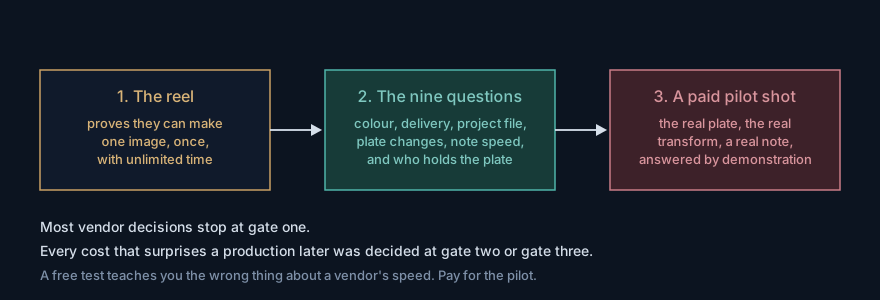
Short answer: Find out about colour, delivery format, note turnaround, who does the work, what happens when the plate changes, and what they need from you. A reel shows whether somebody can make one image when they have unlimited time. These questions show whether a block of your shots will come back usable, which is what you are actually buying.
Most discussions with vendors center on the wrong topic. People view the reel, bargain over the rate, and postpone the questions that determine whether the arrangement works until six weeks later, when they ask them in an email at a stage when the answer is expensive.
Nine questions, ranked by how useful they are to ask. None are meant to trick you, and any competent vendor will answer all of them promptly, since that vendor has been burned by the same things you have.
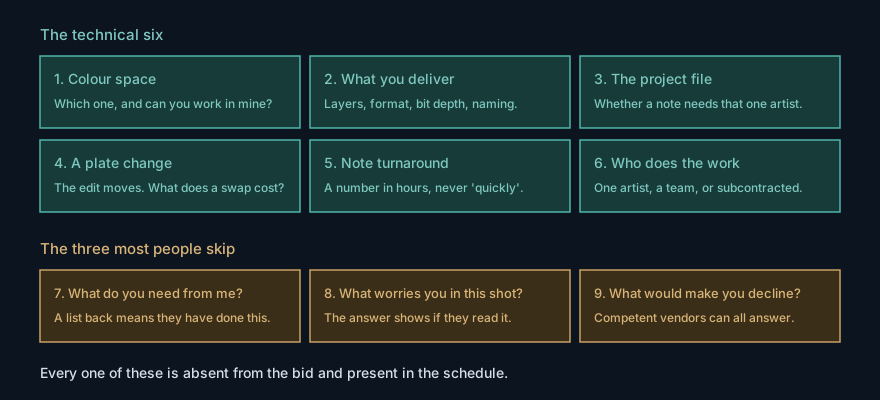
The technical six
1. Which colour space do you operate in, and can you operate in mine? When a delivery has to be redone, the usual reason is that the vendor used a different transform. A vendor who replies without hesitation and requests your show LUT before you offer it has been through this before.
2. Exactly what do you deliver? You need an unambiguous answer: layers instead of a flat frame, plus a specified format, a specified bit depth, and a specified naming convention. For environment work, the format is generally multi-layer OpenEXR, maintained by the Academy Software Foundation at openexr.com. Saying "Whatever you need" sounds obliging but shows no one has thought it through.
3. Do I get a project file? For an environment package, this carries more weight than most people assume. Having a project file lets a note be handled without the original artist, and that is what separates a minor revision from a scheduling conflict.
4. How do you handle a plate change? Plate changes happen. At times the edit point moves, the grade changes, or the shot extends. You want to hear that they build in a way that lets the plate be swapped, and that they will quote the swap cost before doing it.
5. How many hours do you need to turn notes around? Do not say "quickly." State a number. Three rounds of notes at 48 hours each amount to one calendar week, and you either have that week in your schedule or you will get a surprise.
6. Who actually does the work? Ask directly. A single artist, a small group, or work subcontracted further. Any of these arrangements may be acceptable. Not knowing is not acceptable, because it determines whether your NDA covers the people doing the work.
The three that most people skip
7. What do you need from me, and by when? A vendor who provides a list has handled packages before. A vendor who replies "just send it over" will find out what is missing one item at a time, and each one costs a day.
8. What in this shot worries you? No other question on the list gives you as much. It lets a vendor speak plainly about the hard parts before any contract requires them to defend their choices. The reply shows whether they actually read the shot or only glanced at it. If a vendor claims nothing bothers them, either they failed to examine the shot carefully or they will not warn you when problems appear.
9. What would make you decline this? Competent vendors can answer. They usually point to schedule problems, a design that is still shifting, or a shot described without its camera move. You can tell from their reply what they know about the ways these packages fail.
What a vague answer actually costs
| Question | A vague answer means | Where it lands |
|---|---|---|
| Colour space | They will work in theirs | A redo, discovered at first comp |
| Delivery format | A flat frame | Every note becomes a round trip |
| Project file | The original artist is a dependency | Notes stall when that person is busy |
| Plate change | The shot gets rebuilt | An unbudgeted second pass |
| Note turnaround | Whatever it turns out to be | A week that is not in your schedule |
| Who does the work | You do not know who holds the plate | A security question you cannot answer |
Every one of these is absent from the bid and present in the schedule; that is the pattern.
Why a paid pilot beats the whole conversation
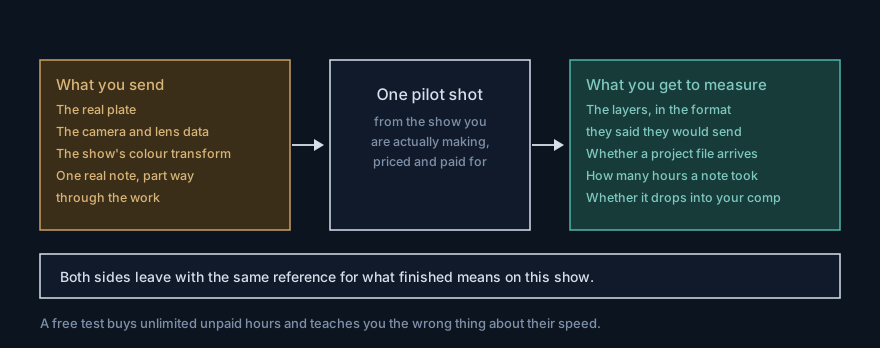
One shot from the actual show, featuring the actual plate, the actual transform and an actual note, answers most of the nine questions by showing rather than stating.
You see what they supply, the format it arrives in, how quickly they answer a note, and whether the returned material fits into your comp or stays next to it. Both sides also come away with a shared reference for what "done" means on this show, which is worth more than any written spec.
Pay for it. If the test is free, a vendor may spend unlimited unpaid time producing a result you cannot reproduce at volume, and you get a wrong idea of their speed.
What if the vendor is a single artist?
This happens often in environment work and does not automatically create a problem. Environments break cleanly into shot-sized pieces, and a set of eight shots in one location is a normal workload for one person over a sensible schedule.
The questions shift a little. Ask what happens if they fall ill. Ask how many shots per week they can actually sustain for this type of work, and treat a confidently stated high number with more suspicion than a smaller one. Ask if the project file is handed over, because with a single artist that file is your only way to continue if something happens.
In return, you get a short note loop, with no intermediary between whoever gives the note and whoever acts on it. For environment work, where notes are visual and suffer when passed along, this is an actual benefit, not a consolation.
Where to go from here
In Toronto, Chumak Studio paints environments for film and television, working with other studios as well as directly with productions. Service lines are shown at /services/digital-matte-painting/, and the credit list, which names the studio behind each credit, is available at /credits/.
When you are comparing providers for an environment package, send one shot along with the note that accompanies it. You will receive a written reply to all nine of the questions above before anyone discusses a rate.