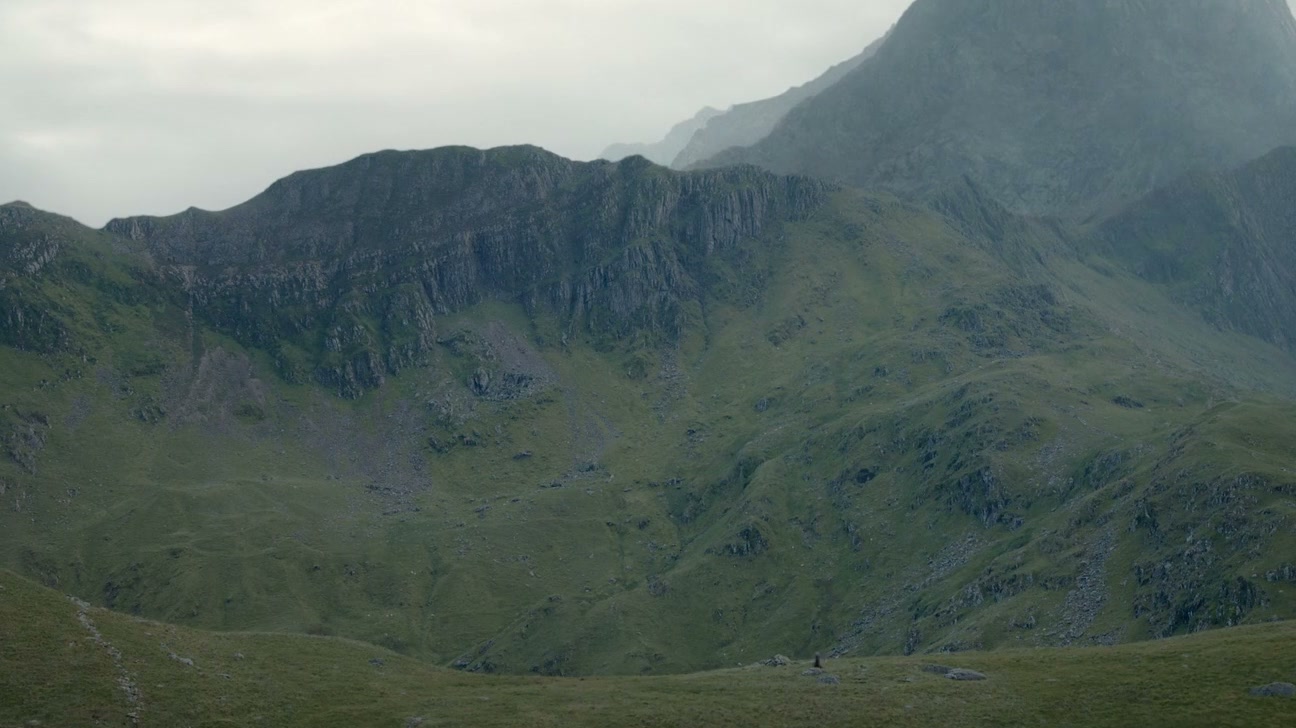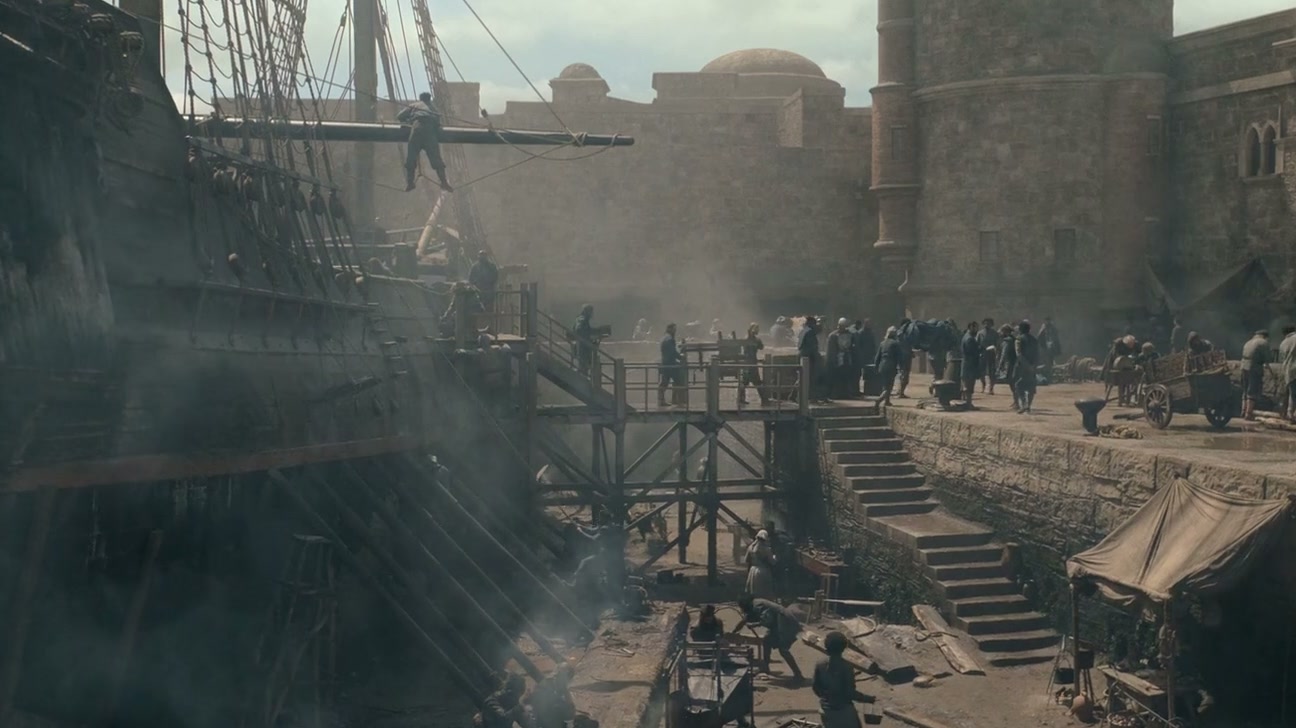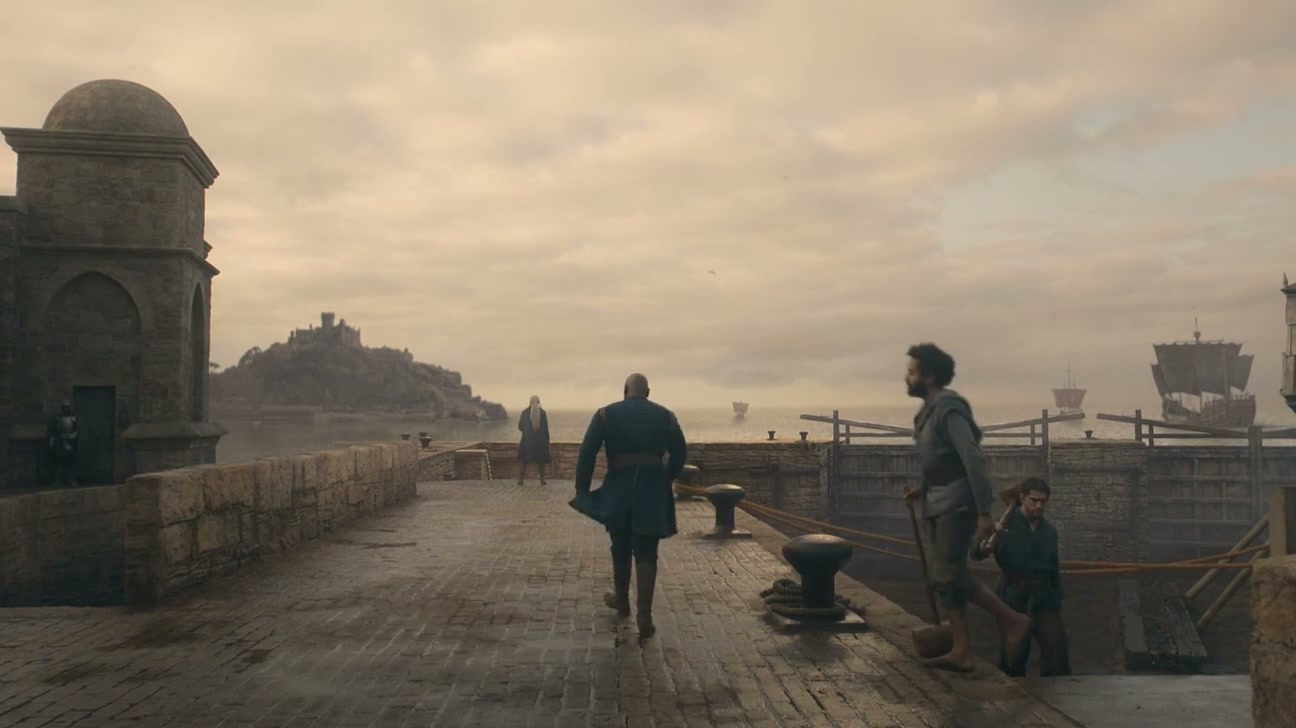
Short answer: You proceed down a ladder of evidence. First comes a photograph of the place itself, then a photograph of somewhere nearby, then a surviving building of the same period and purpose, then plans, maps and paintings, then written descriptions, then deductions from building methods of the time. Each detail in the frame comes from one of those rungs, and knowing which rung supplied it is what separates a reconstruction from a guess that will be contested once it is broadcast.
Only a limited part of history is photographed, and the coverage is uneven. Go far enough into the past, or to a place nobody photographed, and there is nothing. The frame still has to be filled, and it must withstand an audience that includes people who know the subject.
This is the procedure, and the section that influences a production most is at the end, in its implications for approvals.
The evidence ladder
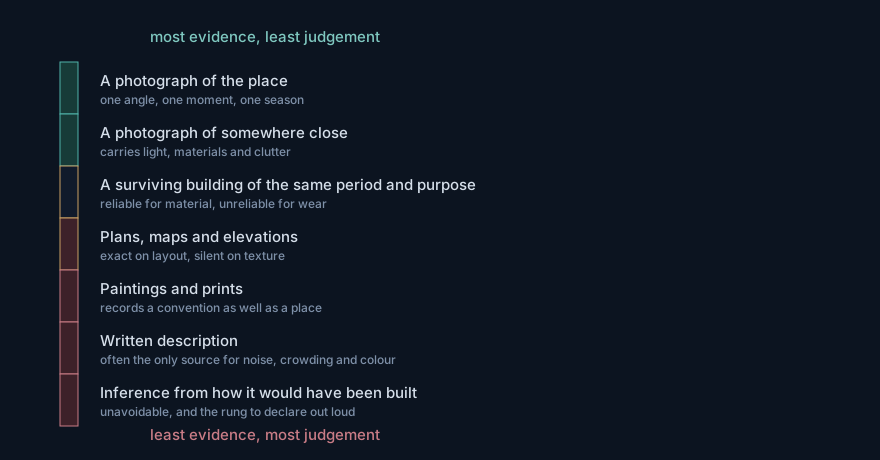
A photo of the site. It is uncommon, and even when it exists, it captures one angle, one moment and one season, usually not the one the shot requires.
A photo taken nearby. The next street over, the same town, the same year. It captures the light, the materials, the state of repair and the amount of clutter, and those are what give a period frame its convincing look.
A building of the same period and purpose that survives. It can be photographed today, and it is reliable for materials and construction, unreliable for wear, because it has been maintained for the following century.
Plans, maps and elevations. They are useful for layout and scale. They show nothing of texture, weather and life.
Paintings and prints. They are useful, but they can mislead. You see what a place looked like through a convention of depiction, and you can take on that convention without noticing. Look at a painted harbour view and you learn both what stood there and what the painter's tradition considered worth including.
Written description. Usually the sole source for smell, noise, crowding and colour, since the visual record preserves none of these well.
Inference. How were these walls assembled, what were they assembled from, where did the material originate, how far could it be moved, how did that surface wear in that climate. The lowest rung, and it cannot be skipped.
Why the rung matters more than the detail
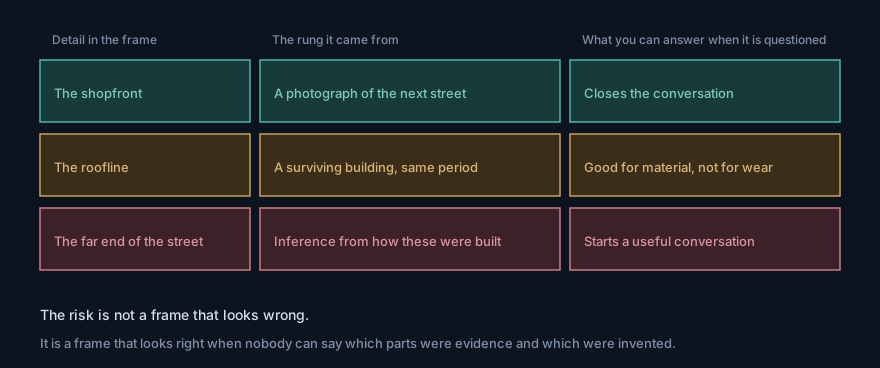
Any capable artist can render a believable historical street. The danger is not that it will seem inaccurate. It is that it will seem accurate while being false, and no one, including the person who painted it, can say which details were grounded in evidence and which were imagined.
The problem disappears once you record the rung. When the historical advisor questions a shopfront, you can answer in one of two ways: "that came from a photograph of the next street in 1878" or "that was inferred from how these were built". With those two answers, you get completely different conversations. The first closes the discussion. The second starts a useful one.
During the work, keep a brief note for each element. It adds little effort at the time and avoids entire review cycles later, because otherwise you must rebuild the reasoning weeks later from memory.
What actually makes a period frame convincing
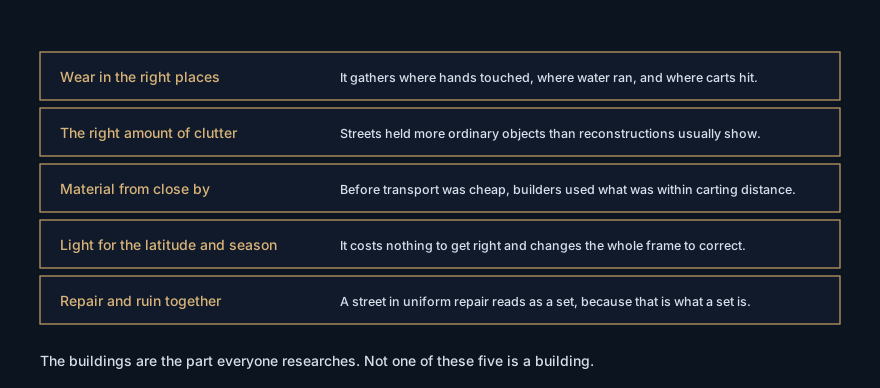
Not the buildings. The buildings are the part everyone researches.
Wear in the right places. Period frames usually fail because they are either too clean or uniformly dirty. Actual wear accumulates where people touched, where water ran, and where carts hit.
The correct amount of clutter. The streets contained more objects than reconstructions usually show, and those objects were ordinary.
Materials came from the surrounding area. Before transport became cheap, builders used what was close at hand. A stone that does not belong to the region looks wrong even to a viewer who cannot name it.
Light that matches the latitude and the season. It costs nothing to get right and is expensive to correct, because it alters every part of the frame at once.
Signs of things left unfinished and abandoned. Real places are always partly being repaired and partly falling into ruin. A period street kept in uniform repair looks like a set, since sets are exactly that.
Where this collides with the schedule
Research is a real occupation, and it often cannot be seen in a bid.
A useful early move for a production is to decide the accuracy standard and state it clearly. "This must satisfy a specialist" and "this must feel right to a general audience" are very different aims, and both are legitimate. What is not workable is for that standard to change after the frames are made, which usually happens when a historical advisor is brought in late.
When a show has an advisor, bring them to review the design before painting starts, not after. A comment on a sketch amounts to a conversation. The same comment on a finished frame amounts to a rebuild.
What do I do if the evidence runs out?
State it in the frame, and keep it unspecific where you do not know.
If there is no documentation for the far end of the street, it can be shown as haze, weather, dusk, or occlusion, and viewers will not take any of those as evasion. They take them as atmosphere. The other option is to invent a firm row of buildings; that yields a frame whose claim nobody can support, and a reviewer who knows the town is likely to raise that claim later.
This technique is a valid approach, not a concession, and the historical record functions the same way. Some facts about most places are simply unknown, and a reconstruction that acknowledges this quietly is more trustworthy than one that does not.
Where to go from here
Chumak Studio paints settings for film and television in Toronto, including period work, and is responsible for both the visual development that establishes what a place once was and the digital matte painting that places it into the frame. The credit list is available at /credits/.
When you have a period sequence and do not know how much of it is documented, send the location and the year. Before painting begins, you will get an honest assessment of which parts of the frame have documentary support and which parts must be inferred.