Short answer: Objects close to the camera pass across objects farther from it whenever the camera moves. This relative movement is parallax, and the eye reads it continually without being told to. A flat painting has neither near nor far, so all of it moves as a single sheet, and the image looks like a picture hanging behind the actors. To correct this, split the painting by depth and project the pieces onto simple geometry; that is a different job and a different price.
Nearly anyone who has ordered an environment shot has encountered this. The frozen frame looks great. All parties sign off on it. But when the shot runs, something is off, and no one can pinpoint what, except that it appears artificial.
Parallax, or its absence, is what they are observing. Here is what is happening and what truly corrects it.
What the eye is catching
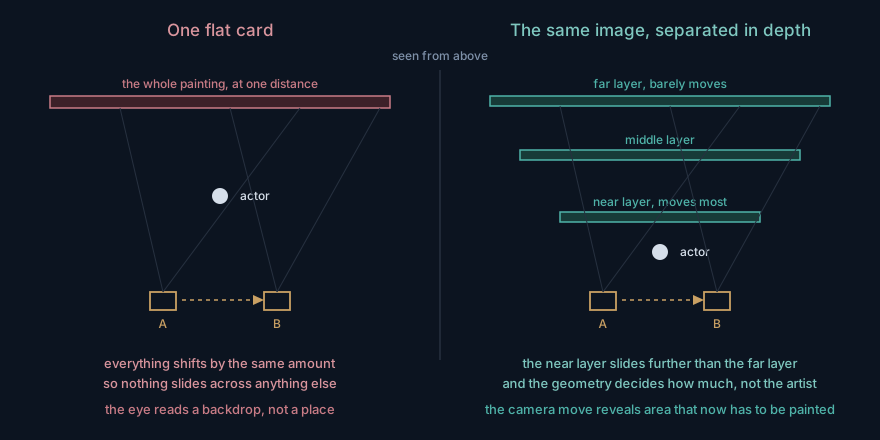
Stand in one spot and look through a window at a street. Then shift your head twenty centimetres to the left. The window frame passes across the buildings. The nearby lamp post crosses the far building faster than the far building crosses the sky. The sky remains still.
There is no conscious calculation in any of that. It is one of the oldest depth signals a person has, it runs without pause, and it is much more acute than most people expect. The eye can detect an incorrect parallax relationship in a couple of frames, well before the viewer can name what is off.
A flat painted card provides the eye with nothing. All parts of it move by the same amount, in the same direction, at the same speed. The viewer is not consciously aware of a missing depth cue. They notice that the actor appears to be standing in front of a backdrop, which is exactly what is occurring.
Why you cannot fake it in two dimensions
Most people begin by shifting the painting a bit, resizing it slightly, or applying a soft blur to its foreground. These approaches do not create parallax, because parallax is not motion. It means different parts of the frame move in different ways, and those differences must correspond to a single three dimensional arrangement.
If you move the entire painting, all of its elements shift as one. If you resize it, everything enlarges, even the components that ought to expand more slowly. Divide it into two cards and move each at a separate speed, and the result improves, until the camera travels far enough that the joint between the cards shows as a sliding edge, which tends to occur earlier than you would like.
The amount of relative motion each part of the frame needs is not an artistic decision. It comes from where those things are in space and where the camera goes. That means the right approach is to place the image in space.
What 2.5D actually means
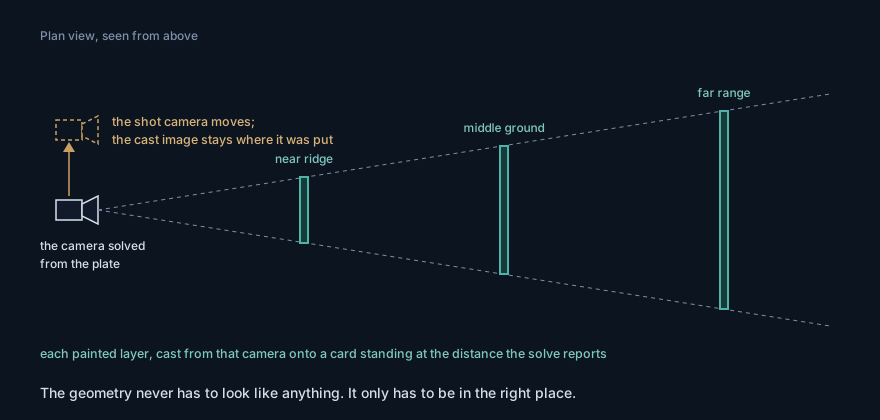
The trade calls most modern matte painting 2.5D, which involves projecting painted material onto simple geometry.
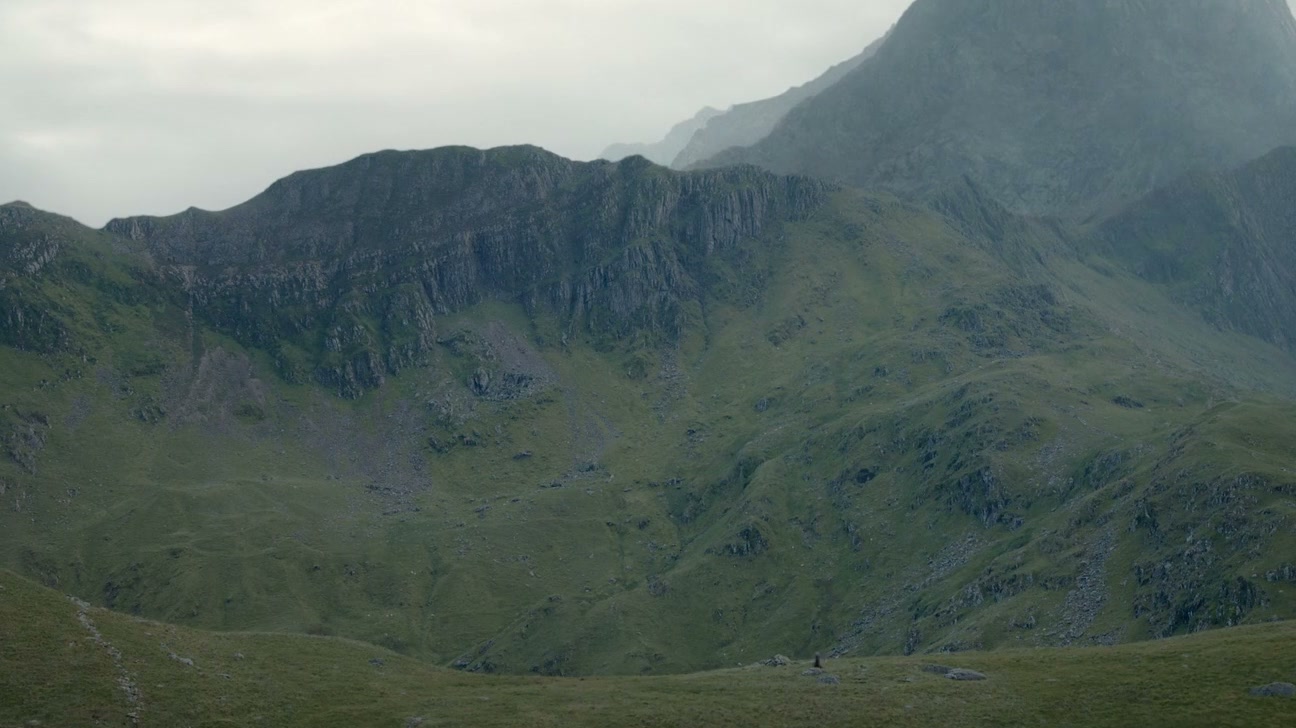
No detailed modelling is done for any part. The cliff is not an actual cliff; it is a rough card or a very simple mesh placed at about the right distance and about the right angle. From the camera position at the time the plate was shot, the painting is projected onto that geometry. Then the camera moves, and the projected image moves correctly, because the geometry is actually at a distance and actually in front of or behind other objects.
The output has the look of a painting and the behaviour of a constructed space. That pairing is why this technique became dominant, and why an environment artist spends a surprising amount of their time on geometry that no one will ever see.
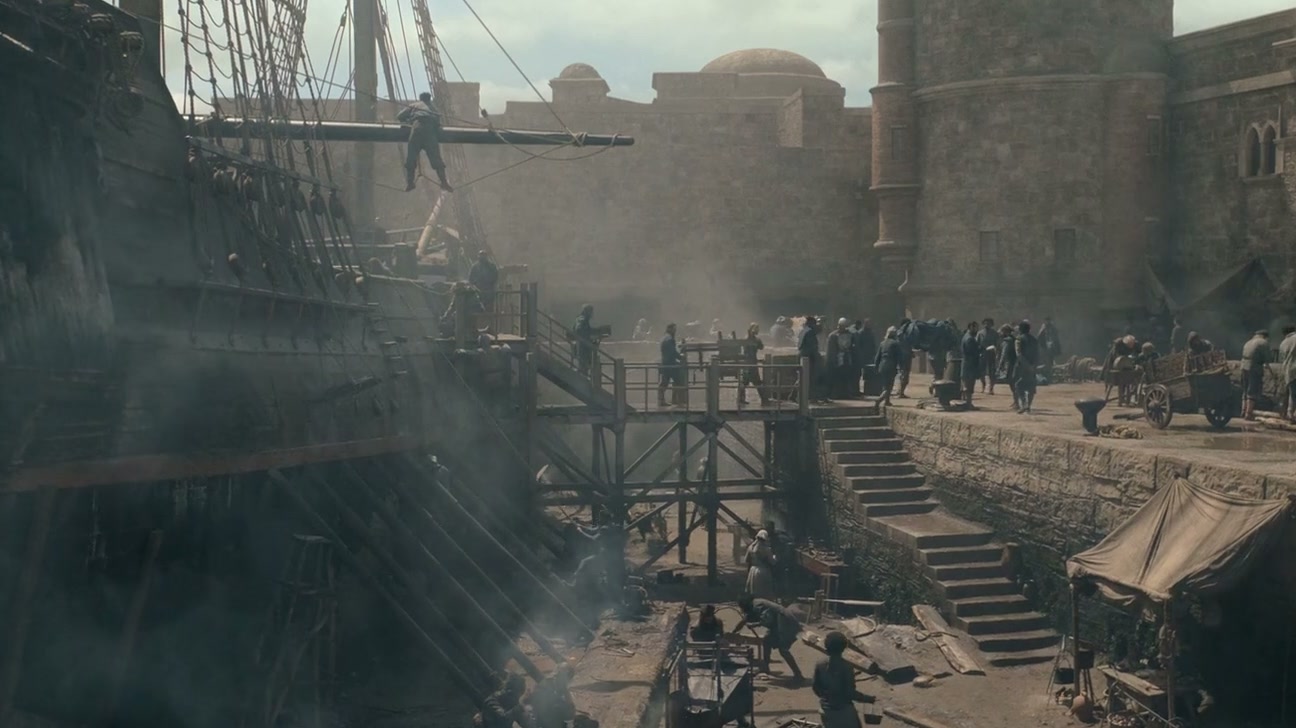
The word "simple" matters a great deal in that description. A background city may consist of forty rectangles. The geometry does not need to look like anything. It only needs to be in the correct position.
Where the work actually goes
Deciding the layers. Someone must study the frame and work out the distance of each part, along with the fineness of separation needed. With too few layers, the picture slides in sheets. With too many, the effort grows but the shot does not improve. That judgement is the main part of the skill.
Painting the hidden areas. People who pay for the work are surprised by this step. As the camera shifts, it sees around objects. The area behind the near ridge was absent from both the original plate and the original painting, but it now has to be present, because the viewer sees it once the camera moves. For each layer, its own edges must be resolved and its own hidden area must be filled in.
Keeping the shot together as it plays. A frame that looks right at the first and last frame of the move can still drift in the middle. A still is not the test. The test is the shot running at speed, over and over, which is why environment artists review motion instead of pictures.
What still breaks
Projection has limits, so learn them before you design a shot around them.
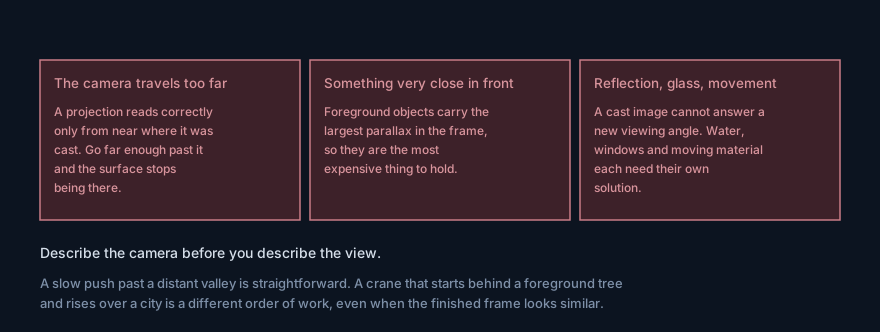
If a camera travels far beyond something, it will eventually reveal that a projected surface is not actually there, because a projection appears correct only when viewed from close to the position where it was cast. Very close foreground objects create the most difficulty, because their parallax is largest. Reflective, transparent, or moving elements inside the painted area present another separate problem, since a projected image cannot adapt to the new viewing angle.
The further the camera travels and the closer the nearest painted thing is, the higher the cost, as a general rule. A slow push past a distant valley is uncomplicated. A crane that starts behind a foreground tree and rises over a city requires a different order of work, even when the final frame looks similar.
So when does a shot need this?
The rule applies at any time when the camera is not locked off. That is its full extent, and the qualifier concerns only degree.
A small handheld drift might call for two or three layers. A full crane demands an environment built with proper depth. The commercial point is to decide this at bid time, not discover it later, because a shot quoted as a flat painting and then given a camera move has not grown a little; it has changed category.
One practical point to take from this: when you describe an environment shot to someone who will set a price, describe the camera first and the picture second. That single detail changes the work more than anything else.
Where to go from here
Based in Toronto, Chumak Studio produces environment art for film and television, covering both the 3D environment work that lies under a painting when the camera moves and digital matte painting itself.
When you have a shot and you cannot determine whether it is in flat or depth territory after the move, send the plate and the camera and you will receive a direct answer, including the amount of the hidden area that would need to be painted.