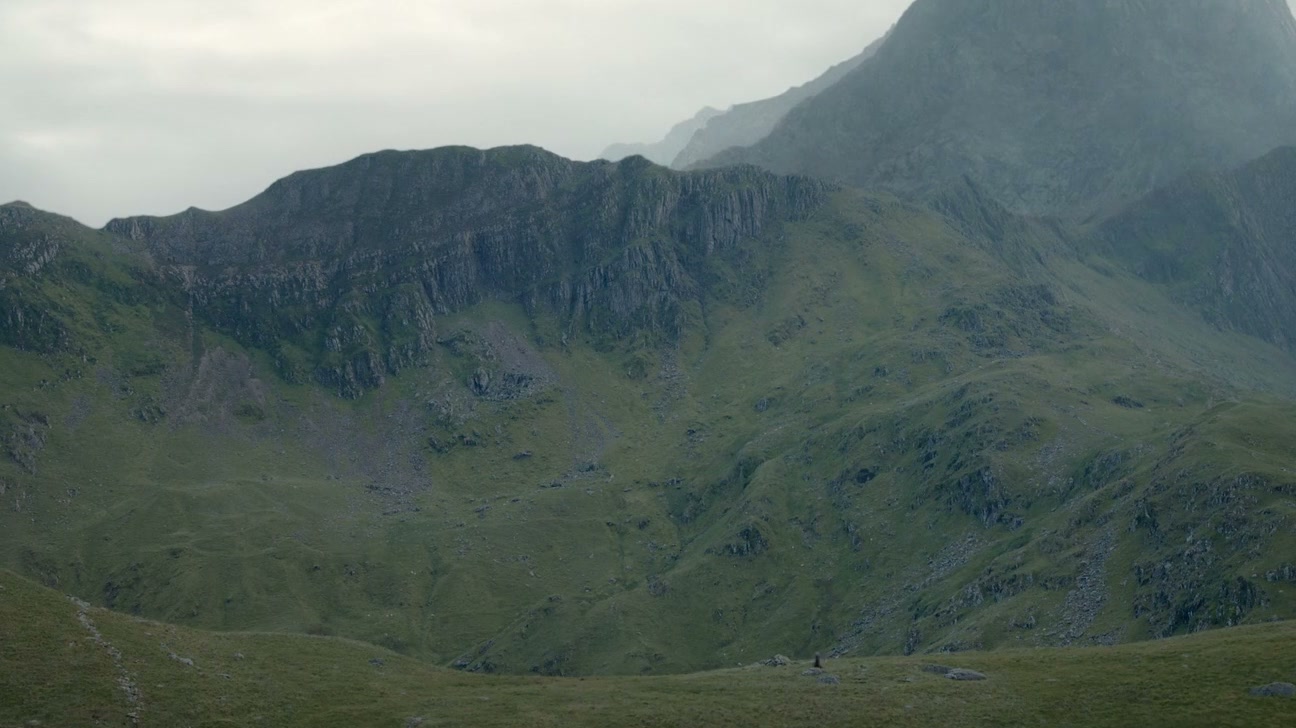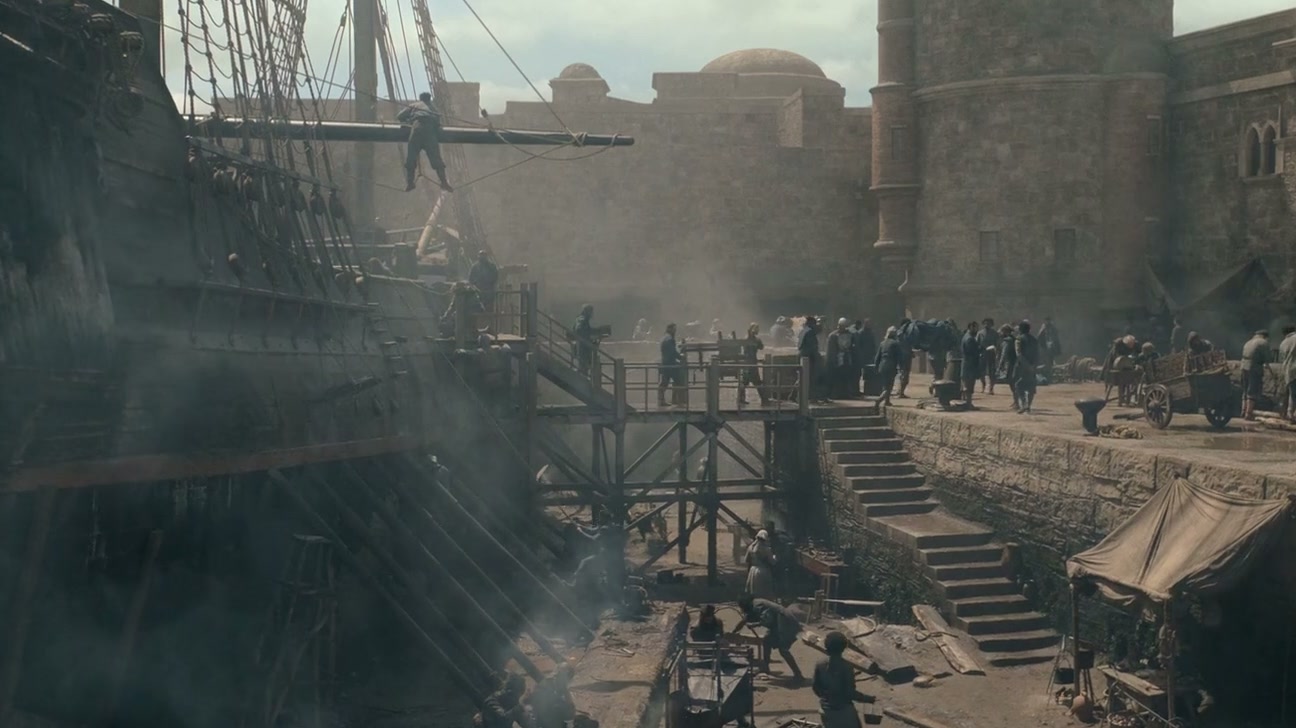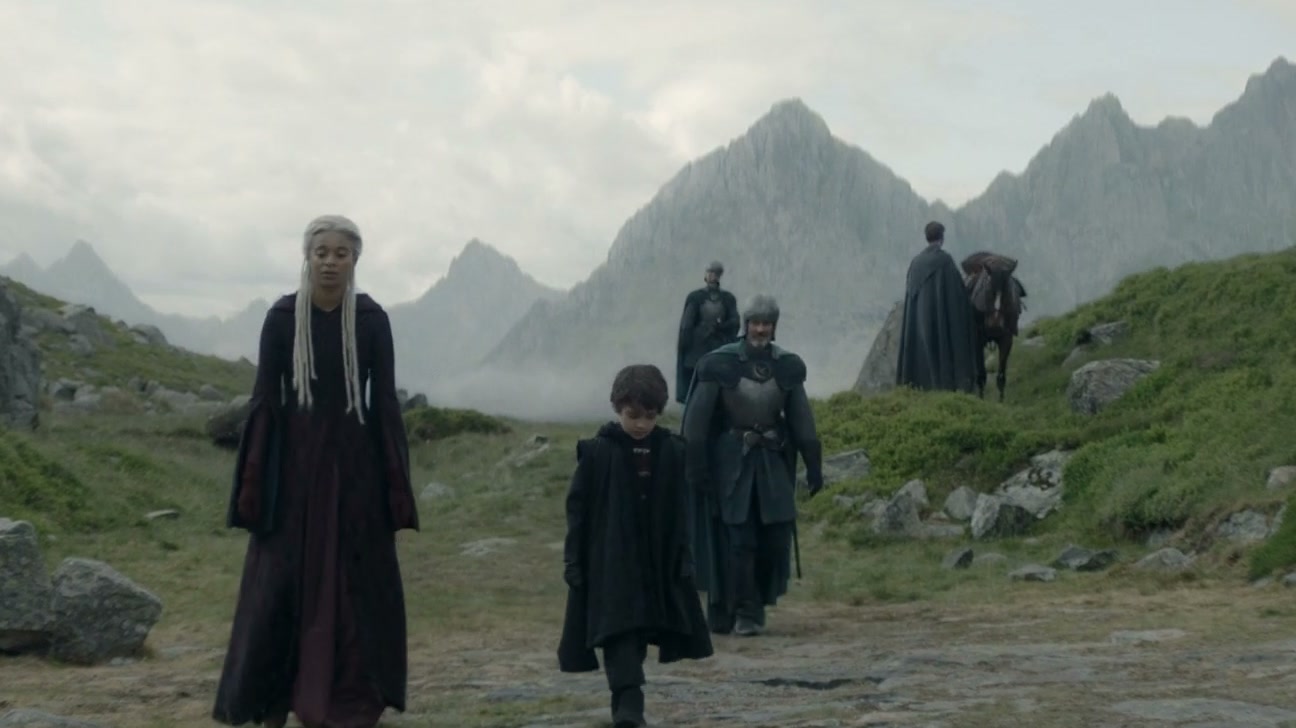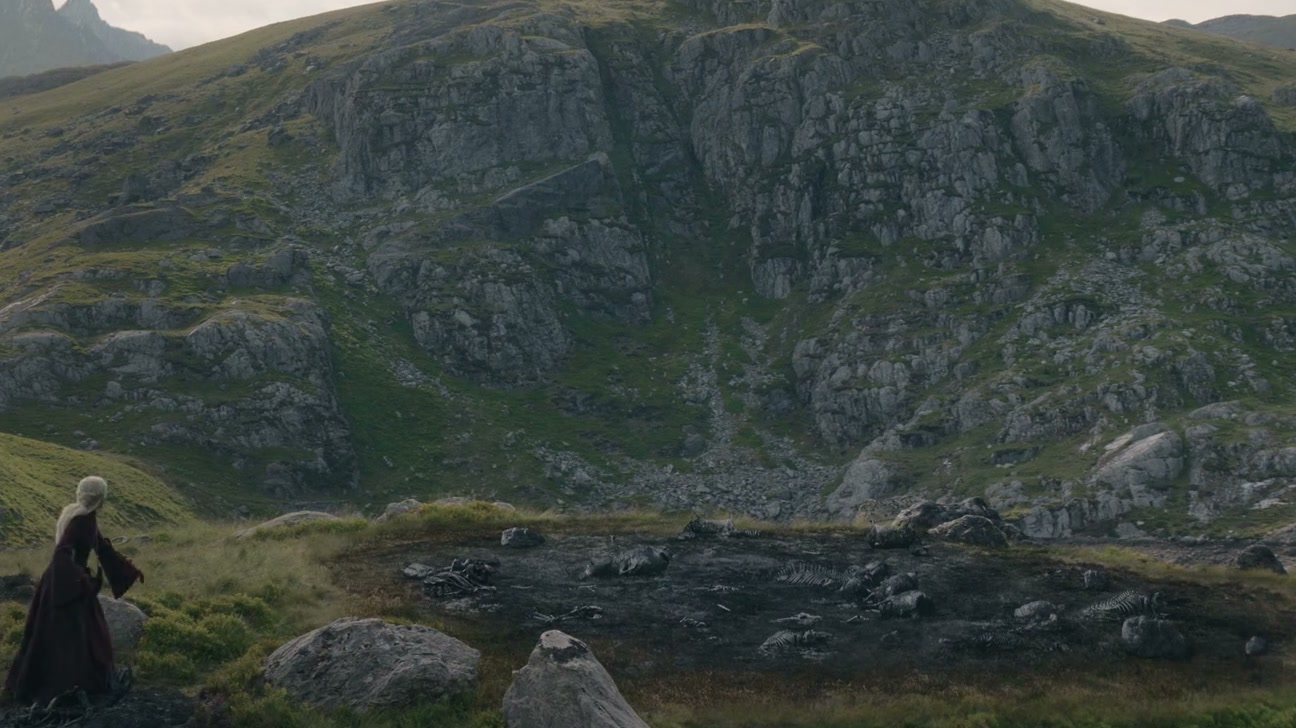
Short answer: A single person takes ownership of the location, a single master key determines it, and each shot is verified against that key instead of the shot before it. Without both of those, a location divided among several artists drifts, and the drift stays hidden from one shot to the next but becomes obvious when the sequence plays. It costs far less to establish the ownership than to correct the drift.
Environment work is easy to divide, so it is divided. Eight shots of the same valley can be handed to four people and return on time. Each of those four shots can pass approval separately, yet the sequence can still fail; that is why the problem is known rather than solved.
The topic is the structure that prevents it, and which parties must own which parts for that structure to operate.
Why drift happens even when every shot is approved
Approval happens shot by shot. Continuity is a property of the sequence.
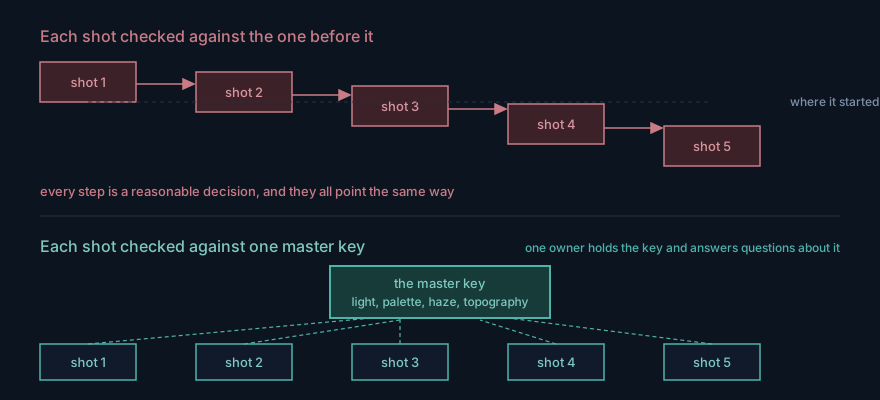
A reviewer assessing a single shot has access to the plate, the note, and the shot before it. Shots five through eleven do not exist yet, so the reviewer cannot see them. Each shot is therefore measured against a reference that shifts, and small, sensible choices build up in one direction. The far ridge becomes a little more dominant because it helped that composition. Each new haze is slightly lighter because the previous version seemed heavy. The sun shifts a few degrees in every shot because each artist interpreted the plate a little differently.
Not one of these is a mistake. Each person faced a shot, and the answer they gave to it was sensible. Run the eleven shots in sequence and the location has changed in weather, time of day and topography, and nobody can identify which shot was responsible.
The master key
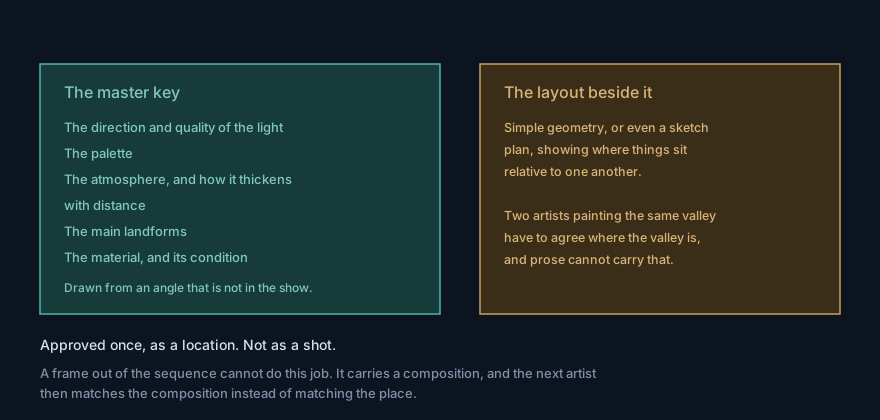
A single picture, or a small group, that establishes the location instead of any photograph taken inside it.
It sets the elements that must not change: the direction and quality of the light, the palette, the atmosphere and how dense it becomes with distance, the main landforms, and the material and its condition. The person who owns the location creates it once, early on, and it receives approval as a location, not as a shot.
What matters is that it is not one of the frames in the sequence. A frame contains a composition, and that composition prompts the next artist to compose in a similar way rather than match the place. A key built deliberately from an angle not present in the show avoids this, and it also clarifies that the thing being matched is the location.
For a location with real depth, you usually find a rough layout next to the key: simple geometry or even a sketch plan that indicates where things sit relative to one another. When two artists paint the same valley from different angles, they need to agree on the valley's position, and prose cannot provide that.
One owner, named
The location is what somebody must hold. Neither the sequence nor the show. The location itself.
They make the key, respond to questions about it, and compare every shot with it before the shot moves to review. The position requires only a few hours, and splitting it defeats the purpose, because the whole idea is to apply one judgement consistently.
People skip this stage more often than any other, usually because it seems like coordination overhead on a schedule that is already tight. The overhead is real, and it is much smaller than a continuity pass across eleven finished shots at the end of a schedule, the alternative that arrives at the worst possible moment.
What to check, and when
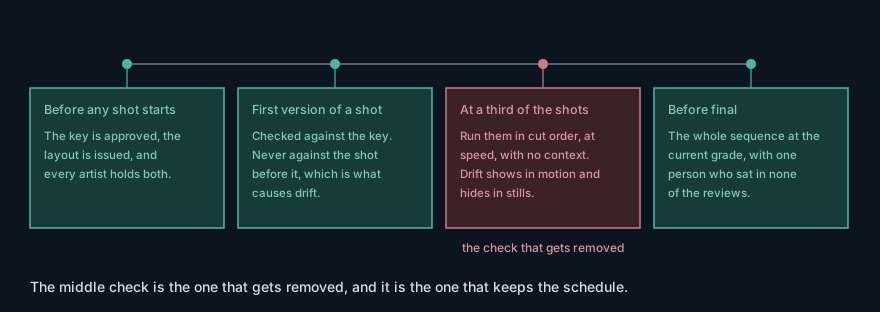
Prior to any shot beginning: the key has been approved, the layout is present, and every artist holds both.
On the first version of each shot: compare it to the key, not to the shot before it. Only this rule stops drift, since checking a shot against the previous one is exactly what causes drift.
When a third of the shots are present: run them in cut order, without context, at speed. You can spot drift in motion but not in stills, and at a third of the way through, fixing it is still cheap.
Before final: run through the entire sequence from start to finish at the current grade, preferably with someone who was not involved in the reviews.
The check in the middle is the one that gets removed, and that same check is what keeps the schedule on track.
When the location is split between vendors
Because the owner now has to hold a location across an organisational boundary, all of the preceding points still apply and become more difficult.
In the workable version, the key and the layout go out with the package, the owner stays on your side, and the vendor verifies against the key before delivery, not after. The approach that fails is to have two vendors each hold part of the same location and reconcile at the end.
If you can avoid it, do not divide one location among multiple vendors. Divide by location instead. When one vendor handles all eleven shots of the valley, continuity can stay inside that vendor, which is far simpler than keeping it consistent across a boundary. The second through eleventh shots also cost less because they reuse the first shot's solution.
What if the location changes halfway through?
It is going to happen at least once, and the process must get through it instead of pretending it will not.
According to the rule, apply the change to the key before you apply it to the shots. If you apply the change to a shot first and expect it to spread outward, the location ends up with two versions of itself in the same sequence, because any shots made before that change never receive it.
Issue the key again with a version and a date, notify every artist who has a shot, and check all previously completed shots against the new key instead of treating them as still correct. People skip that last step, which is why some sequences contain a visible boundary at the shot where the change took effect.
Where to go from here
Chumak Studio, based in Toronto, produces painted environments for film and television, operating either as the vendor that holds a location or with a studio's own artists. The environment services are listed at digital matte painting and 3D environments, and the credit list is at /credits/.
Send the shot list arranged by location when a location appears across a sequence and you need to decide how to divide it. The reply will state plainly which location groups work as independent units and which require a key before anyone starts.